
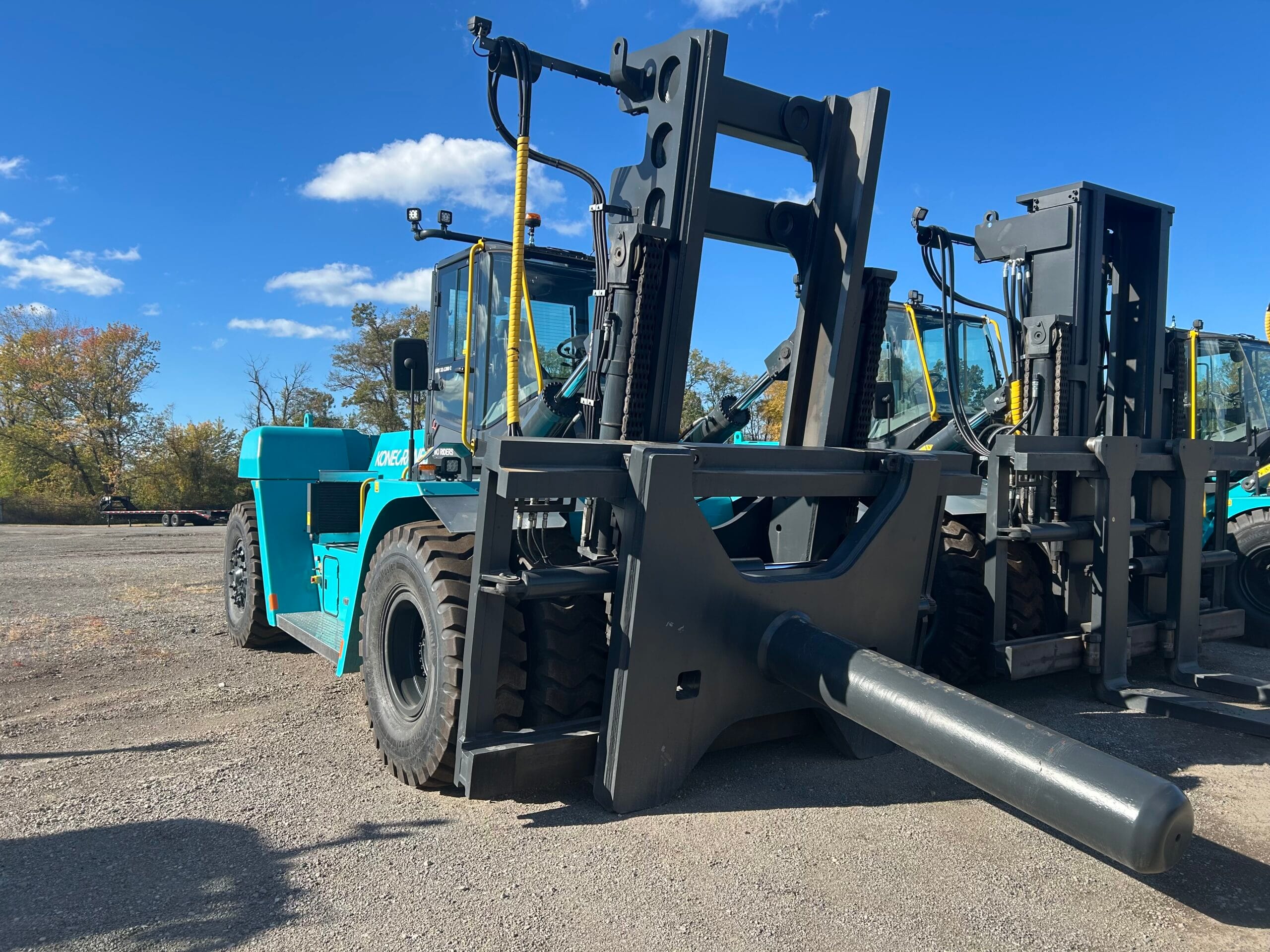
Heavy Equipment Buyer’s Guide
Heavy-Capacity Forklifts: How to Compare, Cost, and Choose
The honest guide to 10 to 85-ton forklifts. Real cost ranges, a straight Konecranes vs Kalmar vs Hyster vs Sany vs Taylor comparison, and the four ways to work with us.
10 to 85 tons
Forklift capacity covered
Every major brand
Serviced, rebuilt, and supported
Brand-independent
Honest comparison, no OEM bias
Updated July 2026
A heavy-capacity forklift is one of the most expensive machines on your site, and when one goes down, production stops with it. This guide gives you the straight answers before you spend: what they cost, how Konecranes, Kalmar, Hyster, Sany, and Taylor compare, what wears and when, and the four ways to put one on your site. We service and rebuild every brand here, so we have no reason to tell you anything but the truth about all of them.
Bulk Equipment Corp. is a brand-independent heavy-equipment uptime partner with shops in Michigan City, Indiana and Memphis, Tennessee, serving steel mills, scrap yards, ports, and intermodal terminals across the United States. We service and manage fleets for every major heavy equipment brand.
The CategoryWhat Counts as a Heavy-Capacity Forklift?
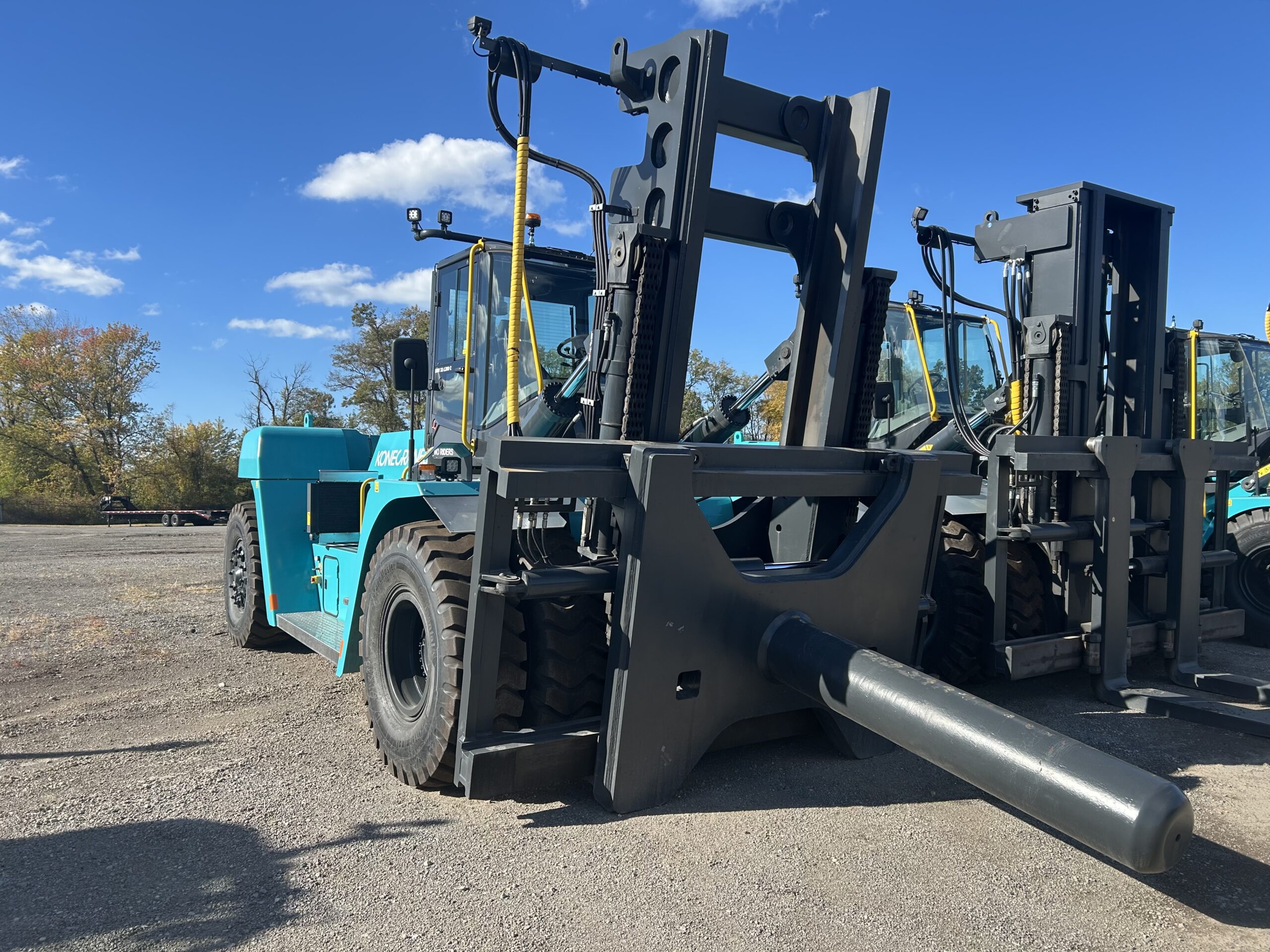
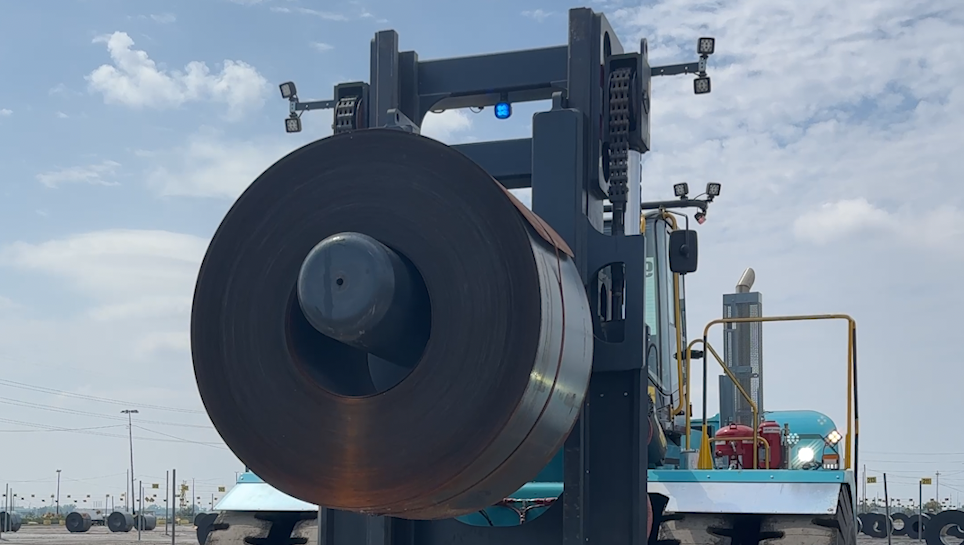
A heavy-capacity forklift is a counterbalanced lift truck rated from about 10 to 85 tons, roughly 22,000 to 187,000 pounds under the forks. These are not the 3,000 to 10,000 pound warehouse forklifts most people picture. They move coils, slabs, billets, lumber packs, and energy components in steel mills, scrap and recycling yards, intermodal and rail terminals, ports, and large lumber yards. At this class, capacity, attachments, duty cycle, and uptime matter far more than brand loyalty.
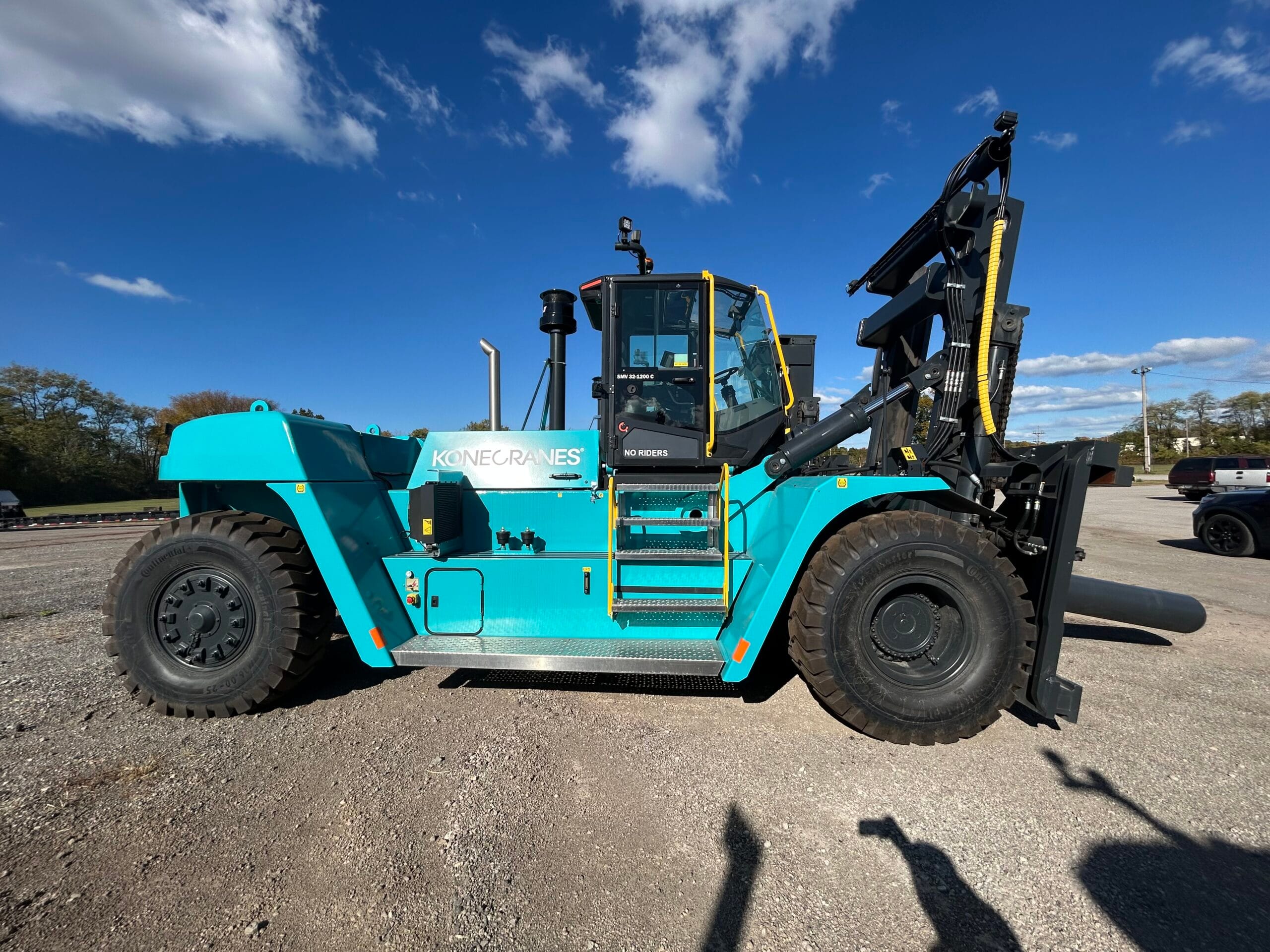
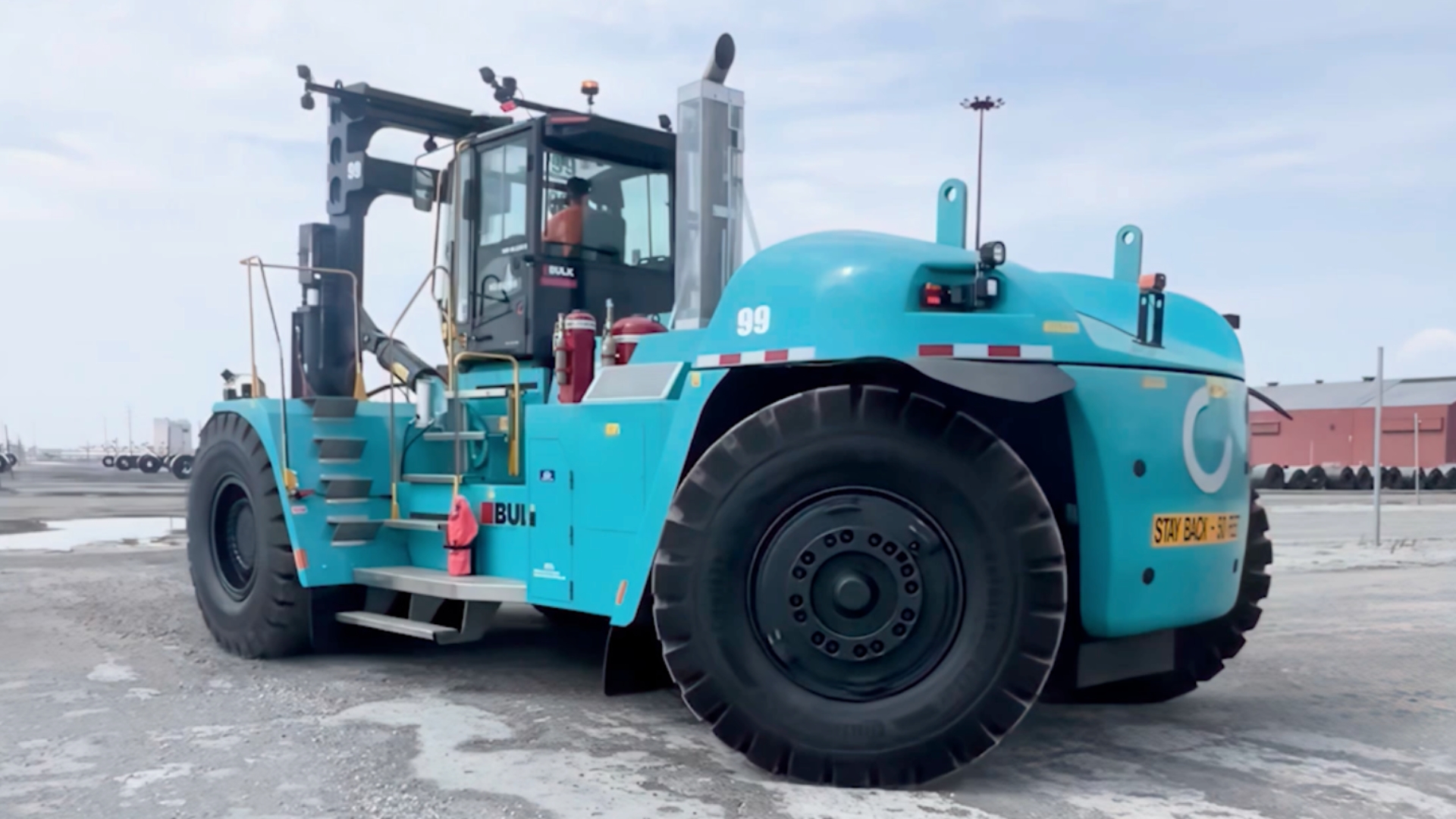
Heavy-capacity forklifts move coils, slabs, and heavy components in conditions that destroy lighter equipment.
One boundary worth drawing: reach stackers and container handlers are a different class of machine, not forklifts. This guide covers counterbalanced forklifts. If your primary loads are shipping containers, see our guides to reach stackers, loaded container handlers, and empty container handlers.
CostHow Much Does a Heavy-Capacity Forklift Cost?
A new heavy-capacity forklift starts at roughly $180,000 in the 10 to 18 ton class, and the price climbs with capacity, attachments, and application spec; super-heavy machines run well past $1.5 million. No one can quote a real number without knowing your loads and options, so treat these as honest starting points, not quotes.
| Class | New (approximate) |
|---|---|
| Medium-heavy (10 to 18 t) | $180,000+ |
| Heavy (18 to 36 t) | $400,000+ |
| Super-heavy (36 to 85 t) | $750,000+ |
- Attachments. Coil rams, slab tongs, magnets, fork positioners, and rotators can add tens of thousands of dollars, and are often what makes the truck useful for your load.
- Application heat and abrasion. Molten slag, hot slab, and scrap duty require protective packages a clean warehouse never needs.
- Diesel versus electric. Electric heavy forklifts cost more up front but can lower cost per hour where the duty cycle and charging fit.
- Capacity headroom. Buying too much capacity wastes money; buying too little destroys the machine early.
Sticker price is the wrong number to fixate on. Cost per hour over the machine’s life is what matters, and that is driven by uptime, parts availability, and how fast a tech reaches you when it goes down. A cheap machine that sits broken is the most expensive one you can buy.
What will a heavy forklift actually cost you?
Send us your application and capacity. We come back with real numbers to rent, buy, or run it as one monthly uptime package. No runaround on price.
The ComparisonKonecranes vs. Kalmar vs. Hyster vs. Sany vs. Taylor
No single brand wins every site. Here is how their heavy forklifts compare, spec for spec.
| Spec | Konecranes | Kalmar | Hyster | Sany | Taylor |
|---|---|---|---|---|---|
| Capacity | 10 to 65 t (SMV series) | 9 to 85 t (DCG, to the DCG850) | 19,000 to 105,800 lb (XD series) | 10 to 32 t US line (SCP) | 4,000 to 125,000 lb (X, XH series) |
| Engine | Volvo Penta or Cummins | Cummins B6.7 or Volvo | Cummins QSB4.5 / QSB6.7 / QSL9 | Cummins 6.7L | Cummins QSB6.7 or Volvo D13 |
| Transmission | Dana TE series; ZF | ZF 3WG; Dana TE17000 / LTE-30500 | ZF 3WG / 5WG; Dana TE-30 on top end | Dana | Dana TE-14 to TE-30 |
| Drive axle | Kessler | Kessler (AxleTech on some models) | Kessler; AxleTech on some models | Kessler D-81 / D-91 | Kessler D-81W / D-106 |
| Tires | 10.00×20 to 18.00×33 | 12.00×20 to 24.00×35 | 10.00×20 to 16.00×25 | 10×20 to 16×25 | 12.00×20 to 18.00×33 |
| Electric option | E-VER li-ion, 10 to 25 t | ECG li-ion range to 33 t | J-series li-ion, 23,000 to 40,000 lb | Not published for the US line | Electric models offered |
Look down any column and the pattern is hard to miss: nearly every brand builds around the same Cummins or Volvo engines, the same Dana and ZF transmissions, and the same Kessler drive axles. Under the paint, these trucks share far more than the brochures suggest. What actually separates them is the capacity range, the attachments, the electric lineup, the telematics, and above all who can support the machine at your site.
The right brand comes down to your capacity, your load, your application heat, and most of all who can keep the machine running near you. A great truck with no local support is a liability.
Ready to spec a Konecranes forklift?
Dig into models, capacities, and attachments on the Bulk Lift Products equipment site.
AttachmentsForklift Attachment Options
The attachment turns a heavy forklift into the right tool for your load: coil rams for steel and aluminum, roll clamps for paper and wood, fork-shaft systems for slabs and masonry, and multi-stage masts for low overhead. Most can be customized for non-standard loads. Note: not every brand will have this vast of a selection.
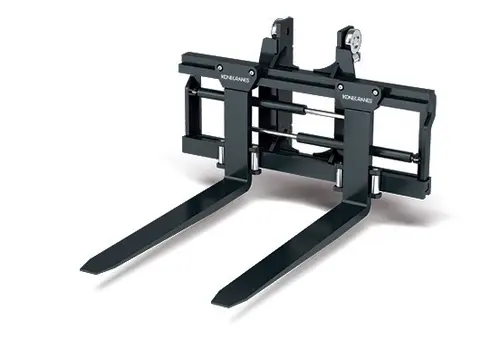
Fork & Carriage
Integrated forks, sideshift, and fork positioning
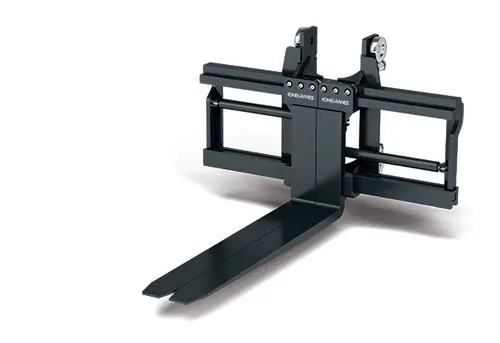
Fork & Carriage
Carriage with kissing forks for steel handling
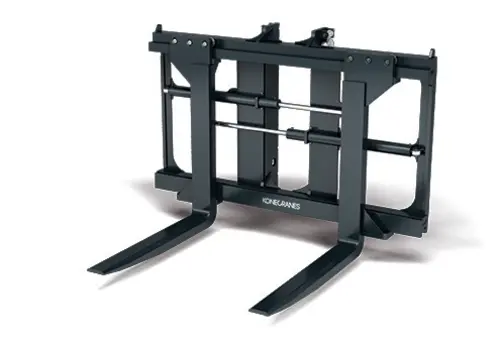
Fork & Carriage
Reinforced forks for round cargo
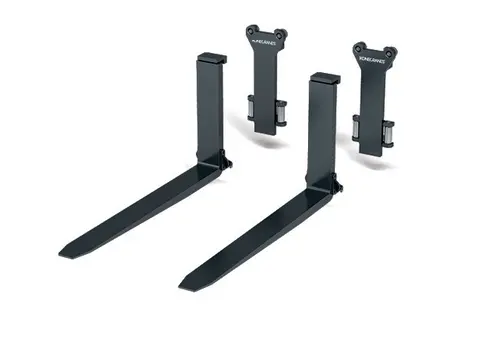
Fork & Shaft Systems
Hook-type
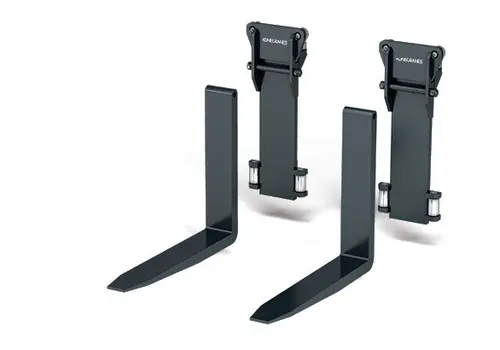
Fork & Shaft Systems
Pin-type
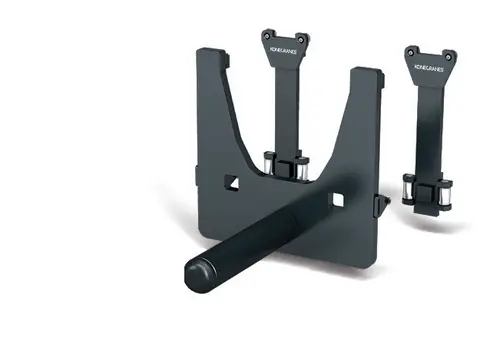
Coil Ram
Single coil ram with fork shaft
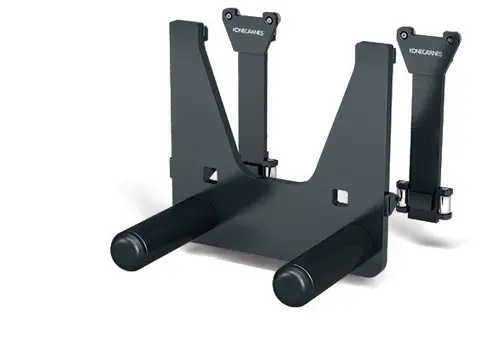
Coil Rams
Double coil rams with fork shaft
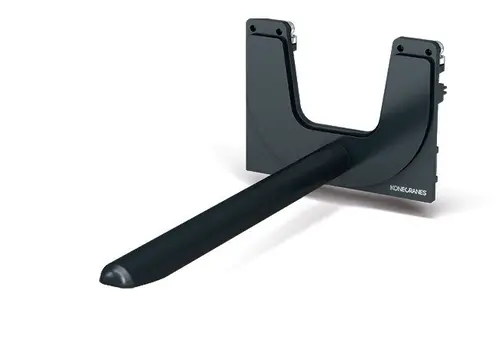
Coil Ram
Single coil ram, integral version
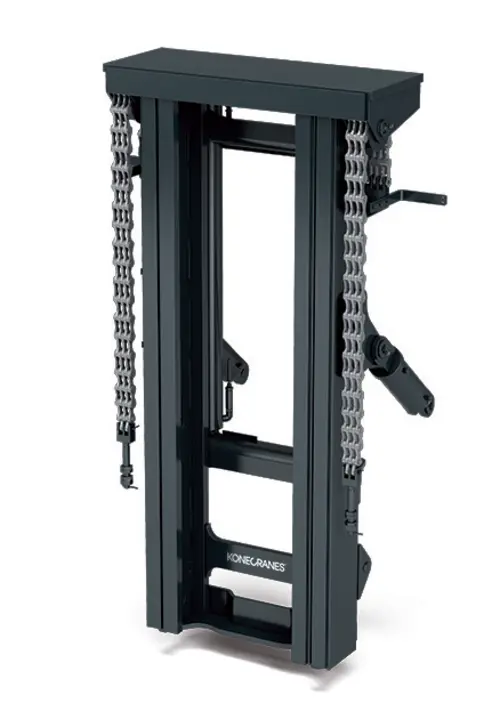
Fork & Carriage Combinations
Duplex, 2-stage, no freelift
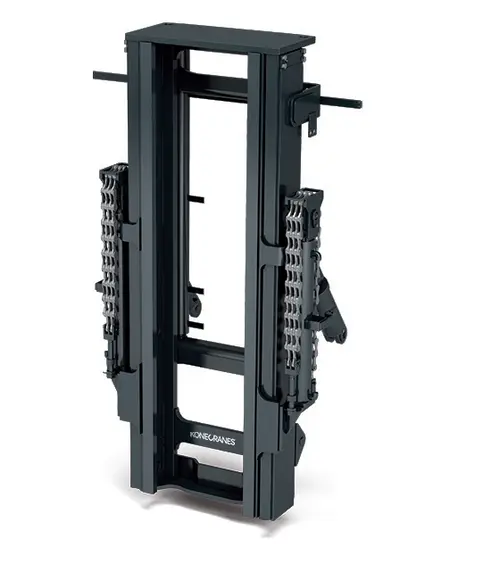
Fork & Carriage Combinations
Duplex, 2-stage with freelift
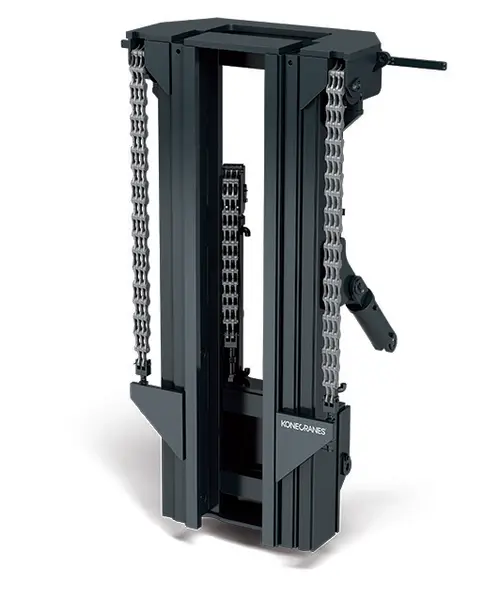
Fork & Carriage Combinations
Triplex, 3-stage with freelift
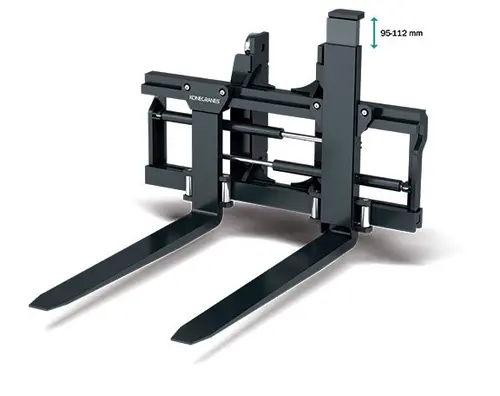
Fork & Carriage Combinations
Carriage with one leveling fork (up/down)
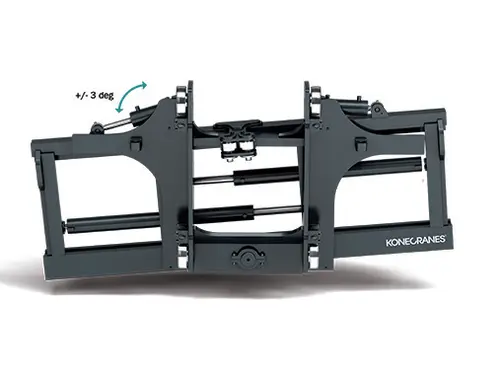
Fork & Carriage Combinations
Carriage with center leveling (2 forks)
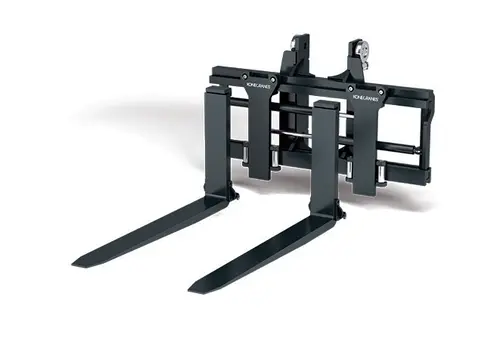
Fork & Carriage Combinations
Fork shaft system (multi-function), pin-type and hook-type
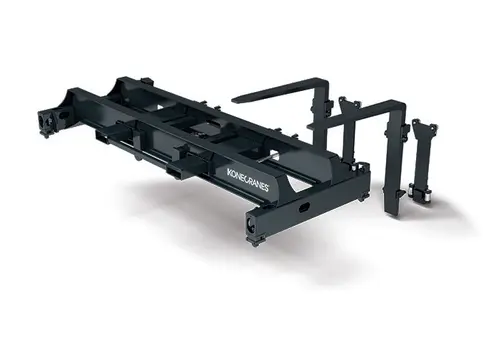
Fork & Carriage Combinations
Container spreaders with inverted forks and fork shafts
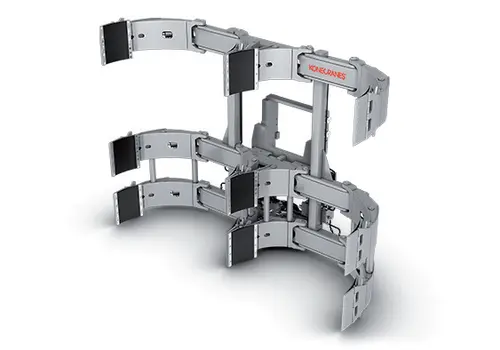
Multiple Paper Roll Clamp
Single or double
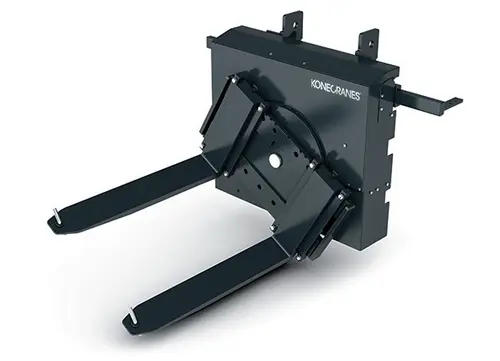
Fork Rotator Carriage
Rotates loads and empties woodchip containers
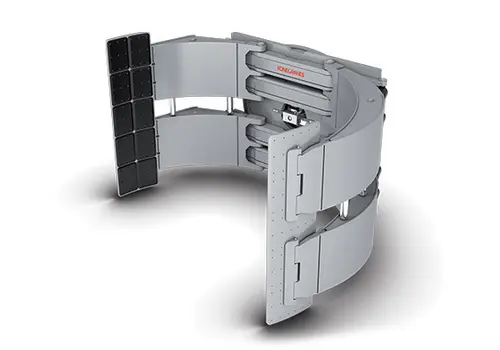
Concrete Tub Clamp
Different versions
Want these attachments on a Konecranes forklift?
Spec coil rams, roll clamps, and fork-shaft systems on a Konecranes truck with the Bulk Lift Products team.
TelematicsWhich Telematics System Comes With Your Forklift?
Every major brand now offers fleet telematics, and it is worth comparing before you buy because the truck will report to that system for the next 20,000 hours. Konecranes TRUCONNECT has come standard on every new lift truck since 2022; the others vary in what is included, what is paid, and what they publish. One detail that matters in this class: Hyster’s own literature notes its load sensing is not available on high-capacity trucks.
| Capability | Konecranes TRUCONNECT | Kalmar Insight | Hyster Tracker | Taylor TaylorTrak Pro | Sany |
|---|---|---|---|---|---|
| Standard from the factory | Yes, Basic tier since 2022 | Subscription-based | Yes on big trucks, data plan included | Hardware standard on current models | Not published |
| Hours, location, and usage data | Yes | Yes | Yes | Yes | Yes |
| Fault alerts and diagnostics | Yes | Yes, critical alarms | Yes, can trigger service calls | Engine warnings | Stated |
| Fuel and idle reporting | Yes, plus consumption predictor | Yes, plus CO2 | Yes | Yes, plus DEF level | Stated |
| Tire pressure monitoring | Yes, Premium tier | Not published | Not published | Yes | Not published |
| Impact and shock detection | Yes, Premium tier, with map location | Yes | Yes, plus impact lockout and camera | Not published | Not published |
| Operator checklists and access | Daily inspection reports | Yes, driver ID and Inspector app | Yes, paid tiers | Not published | Not published |
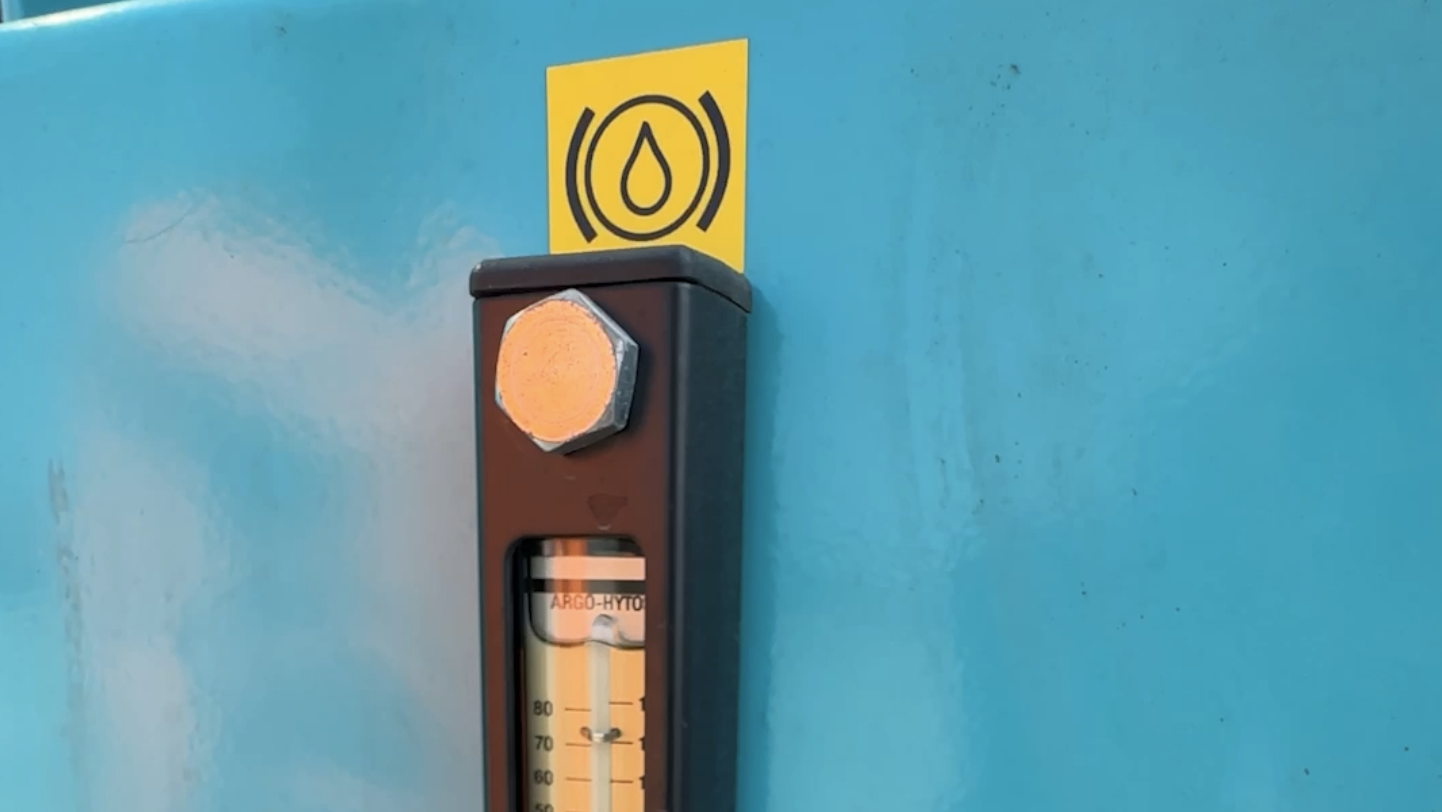
| Hydraulic oil life monitoring | Yes, Premium+ tier | Not published | Not published | Not published | Not published |
“Not published” means the manufacturer does not document the capability publicly, not necessarily that it does not exist; Sany announced its telematics platform in early 2026 and has not yet published availability for its heavy line. TRUCONNECT runs three tiers: Basic is free and standard, Premium adds tire pressure and shock monitoring, and Premium+ adds hydraulic oil condition monitoring that can stretch oil life as much as four times.
Component LifeWhat You’ll Replace and When: Heavy Forklift Component Life
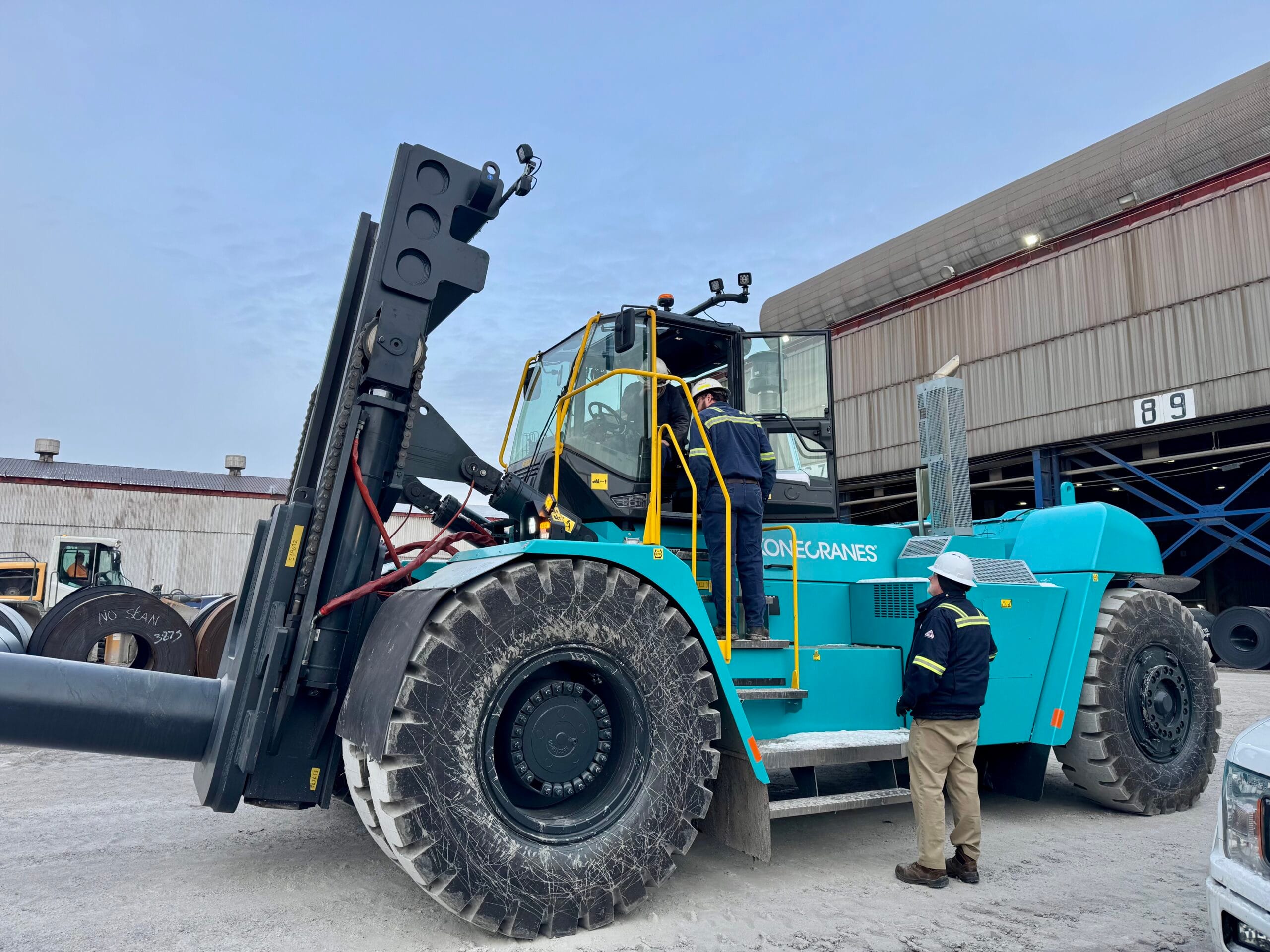
Three-shift steel duty is where heavy forklifts earn their keep, and where they fail.
Everything on a heavy forklift wears on a schedule, and the smart move is planning for it instead of getting surprised by it. Day to day, the regularly replaced items are tires, oils and filters, hydraulic seal kits, and fork and carriage wear components. Beyond those, Konecranes publishes factory expected-life figures for its forklifts’ major components, the point where a component is worn beyond economical repair and gets replaced as a unit. Almost nobody shares this data with buyers. Here it is.
| Component | Hard conditions | Normal conditions |
|---|---|---|
| Mast | 20,000 hrs | 30,000 hrs |
| Mast bearings | 10,000 hrs | 20,000 hrs |
| Engine | 15,000 hrs | 20,000 hrs |
| Transmission | 10,000 hrs | 15,000 hrs |
| Hydraulic pumps | 10,000 hrs | 30,000 hrs |
| Hydraulic cylinders | 10,000 hrs | 30,000 hrs |
| Drive axle | 20,000 hrs | 30,000 hrs |
| Steer axle | 20,000 hrs | 30,000 hrs |
| Chassis | 20,000 hrs | 30,000 hrs |
| Cab interior | 5,000 hrs | 30,000 hrs |
| Tires | 500 hrs | 5,000 hrs |
| Electrical system | 15,000 hrs | 30,000 hrs |
| Hydraulic system | 15,000 hrs | 30,000 hrs |
Read the columns, not just the rows. A drive axle rated for 30,000 hours in a normal operation is done at 20,000 in a hard one, and a cab that lasts the truck’s whole life in careful hands is worn out at 5,000 hours in rough ones. Operating conditions and maintenance discipline, not the badge on the truck, decide what a heavy forklift costs you per hour.
The electric E-VER carries its own factory data: traction motors and inverters are rated at 20,000 to 30,000 hours in normal to good conditions, matching or beating the diesel engine they replace, with the charging connector (5,000 to 15,000 hours) and the thermal management system the shorter-lived items. Source: Konecranes factory expected-life data for its diesel forklifts and E-VER electric forklifts. Other manufacturers do not publish equivalent data.
Already running heavy forklifts? Keep them running.
Brand-independent field service and frame-up rebuilds on any make, dispatched from regional hotlines. Tell us what is down.
OwnershipFour Ways to Work With Us, Built for What You Need
There is more than one way to put a heavy forklift to work, and the right one depends on your utilization, your budget, and how much downtime risk you want to own. These are the four.
Equipment as a Service
Full operational outcomes, not just equipment access. Bulk owns the fleet, carries the maintenance risk, and keeps you running.
- Predictable monthly cost. Zero CAPEX
- Bulk-owned fleet with dedicated backup units
- On-site technicians plus proactive PM
- Uptime-focused, not rental-day focused
- Long-term, site-specific structure
- Risk shifts from your operation to Bulk
Equipment Rental
Flexible fleet access when you need it, without the commitment of ownership.
- Flexible rental periods available
- Wide selection of heavy equipment
- Rapid deployment to your site
- Ideal for seasonal demand or project gaps
- No long-term obligation
Equipment Sales
Buy outright from an authorized distributor for the brands you already run, including Konecranes, Sennebogen, and KAMAG.
- New and used inventory available
- Konecranes, Sennebogen, KAMAG and more
- Spec’d to your application
- Financing and trade-in options
- Factory-backed support
Field Service
Brand-independent heavy equipment maintenance and repair. Call a regional hotline and we will have a technician on site fast.
- Brand-independent: any machine, any OEM
- Regional hotlines for rapid dispatch
- Parts sourcing and full complement inventory
- No need to keep a specialist on payroll
- Established in the steel mill environment
Not sure which way fits? Talk it through.
Tell us your utilization and budget, and we will lay out whether buying, renting, or the all-in monthly package fits your site.
The DecisionWhat Makes a Heavy Forklift “Best” for Your Site
There is no single best heavy forklift, only the best match for your loads, your site, and the partner behind it. Answer these four questions and the right truck specs itself.
- What is the maximum weight you are trying to lift, and how far out does it sit? Capacity is rated at a load center; a long coil or wide load carries farther out and needs more truck than its weight suggests.
- What is the load, and what attachment does it need? Coil rams, slab grabs, rotators, and clamps change the truck’s whole job, and the right one from day one is cheaper than the wrong one in service.
- How many lifts a shift, and how hot or dirty is the work? Three-shift steel duty needs a heavier spec and PM program than a few lifts a day in a clean yard.
- Who is going to keep it running near you? Response time, parts availability, and whether anyone near you can service that brand decide your real cost per hour.
Ask the maintenance managers who run these trucks and most say the same thing: the badge matters less than uptime and parts. The best forklift is the one lifting when production needs it, backed by people who answer the phone when it is not.
By IndustryHeavy Forklift Applications: Industries We Serve
Heavy forklifts earn their keep across very different operations, and the right truck, attachment, and spec change with the work. Here is how they are used across the industries that run them.
Metals Production
- Steel coil and slab handling forklifts equipped with coil rams and fork-shaft systems
- Custom-adapted heavy forklifts for EAF yards, rolling mills, and aluminum operations
- High-cycle forklift duty in hot, abrasive environments where every production hour counts
- Full forklift customization, including third-party attachment integration
Scrap & Recycling
- Scrap-handling forklifts for shredder feed, yard sorting, and ferrous and non-ferrous material
- Built for the high-abuse, continuous cycles of a scrap yard
- Magnet and grab attachment options for loose and irregular scrap loads
- Forklift capacity matched to bucket and ladle loading requirements
Ports & Terminals
- Heavy forklifts for general cargo, breakbulk, and steel freight at port and terminal sites
- Fork and carriage combinations sized for dense, high-value loads
- Fast travel and lift speeds for high-throughput terminal operations
- Proven heavy forklift performance at marine and inland terminals across North America
Rail & Intermodal
- Heavy forklifts for loading and unloading rail cars and trailers in a single move
- Steel, coil, and slab transfer between rail, truck, and yard
- Slab-grab and coil-ram attachments for heavy industrial intermodal loads
- High-capacity lifting for rail-served mills and distribution sites
Concrete & Precast
- Precast slab, beam, and panel handling forklifts with full lifting-mast options
- Fork-shaft systems for brick, block, and dense masonry loads
- Power and stability for the heaviest concrete products without sacrificing fuel efficiency
- Custom forklift adaptations for non-standard load geometry
Mining & Aggregates
- Heavy forklifts for moving engines, gearboxes, cables, tires, and mining components
- Built for dust, debris, and rough-surface operating conditions
- ISO 6055 certified overhead guards standard
- Optional mining kit with fire suppression, emergency stops, and reflective banding
Wood & Paper
- Paper-roll handling forklifts with single and double roll clamps
- Expandable bale attachments that handle pulp bales up to 15 tons in one lift
- Fork-rotator carriages for emptying woodchip containers bound for pulping
- Fork-shaft systems for rough-sawn lumber and timber packs
Logistics & Distribution
- Heavy forklifts for general cargo handling at warehouse and distribution hubs
- Fork and spreader combinations for unitized and palletized heavy freight
- High-cycle throughput with electronic machine control
- One forklift platform adaptable to many load types without changing trucks
Mill Services
- Forklifts for slag and by-product handling in integrated steel-mill support
- Equipment staging and positioning around hot-metal processing areas
- Heavy forklifts custom-built for your specific mill workflows
- Heat-shielding and extended-service-interval adaptations available
Energy & Utilities
- Wind-component forklifts for tower sections, blades, and nacelles
- Heavy pipe and tank handling for oil, gas, and utility infrastructure
- Lift capacity from 10 to 65 tons covers nearly every energy-sector application
- Long-pipe and oversized-load attachment options
Earth Moving
- Forklifts for staging and positioning earthmoving attachments and ground-engaging tools
- On-site movement of heavy equipment components during excavation and site prep
- High-capacity forklifts that move machinery standard trucks cannot reach
Waste & Environmental
- Forklifts for bale and bulk material movement at transfer stations and MRFs
- Built for contaminated, corrosive, and debris-heavy duty cycles
- Attachment options for non-uniform waste loads
Industrial & Other
- Heavy forklifts for component staging and line feeding in general manufacturing
- Custom forklift adaptations for unusual load shapes, weights, and facility layouts
- One configurable forklift platform across multiple in-plant applications
ProofCase Study: A Steel Mill Coil Operation
Ten lift trucks outperformed a fleet nearly twice the size
At one steel coil operation, the previous provider ran older equipment and nearly double the machines, and still could not sustain the throughput the mill required. Bulk put ten well-maintained Konecranes lift trucks on a disciplined PM program in their place, and the smaller fleet outran the larger one. In a mill, uptime is a revenue metric.
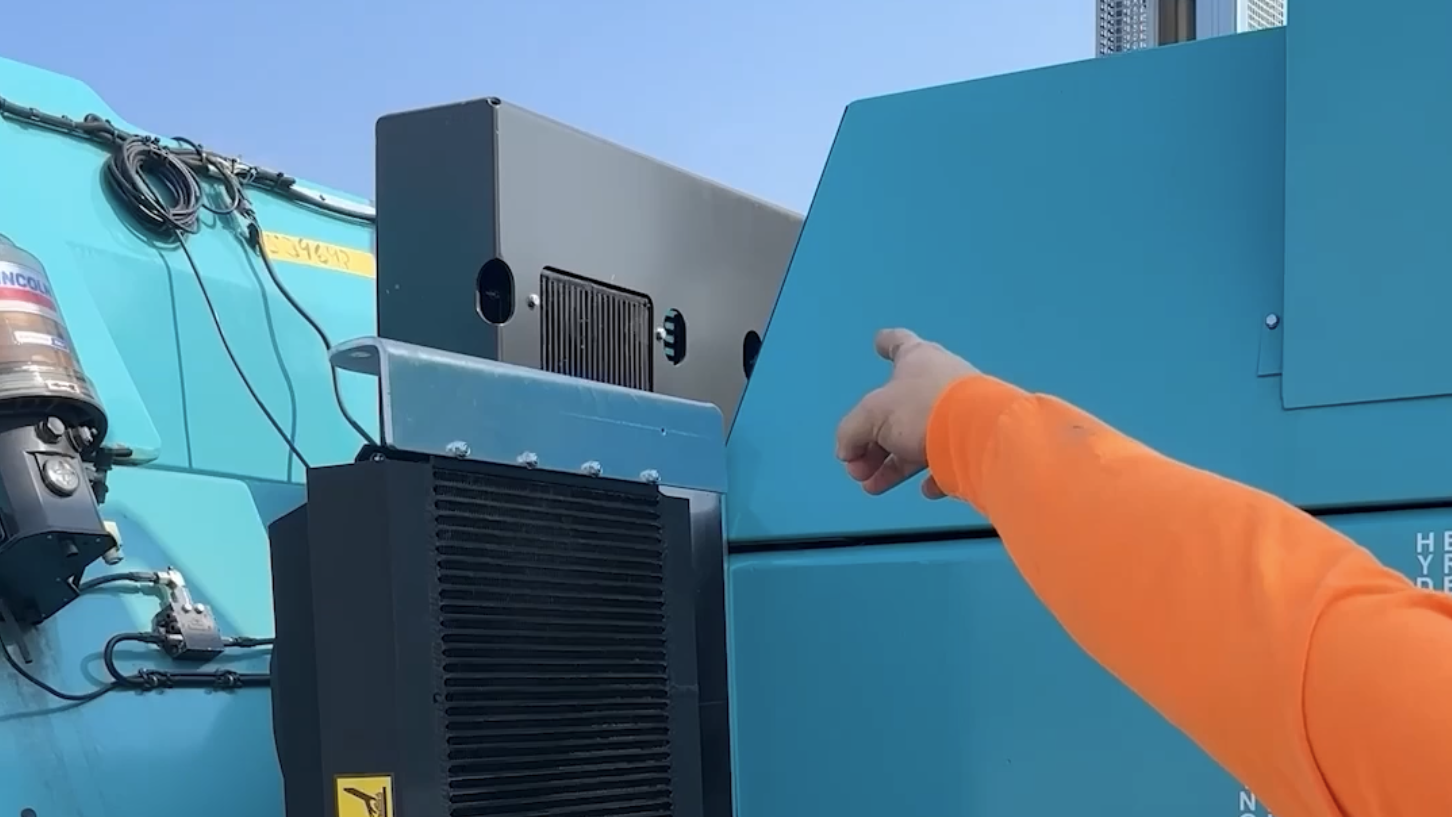
Getting there meant engineering the trucks for the environment: a four-system custom cooling package with zero true overheats since installation, a fabricated guard that stopped a recurring hydraulic leak and fire risk at the load lock valve, and wireless tire-pressure monitoring for tires running in front of hot coils.
Read the full story: the PM program, the custom cooling package, the hydraulic guard, and tire-pressure monitoring.
Learn MoreForklift Articles and Guides

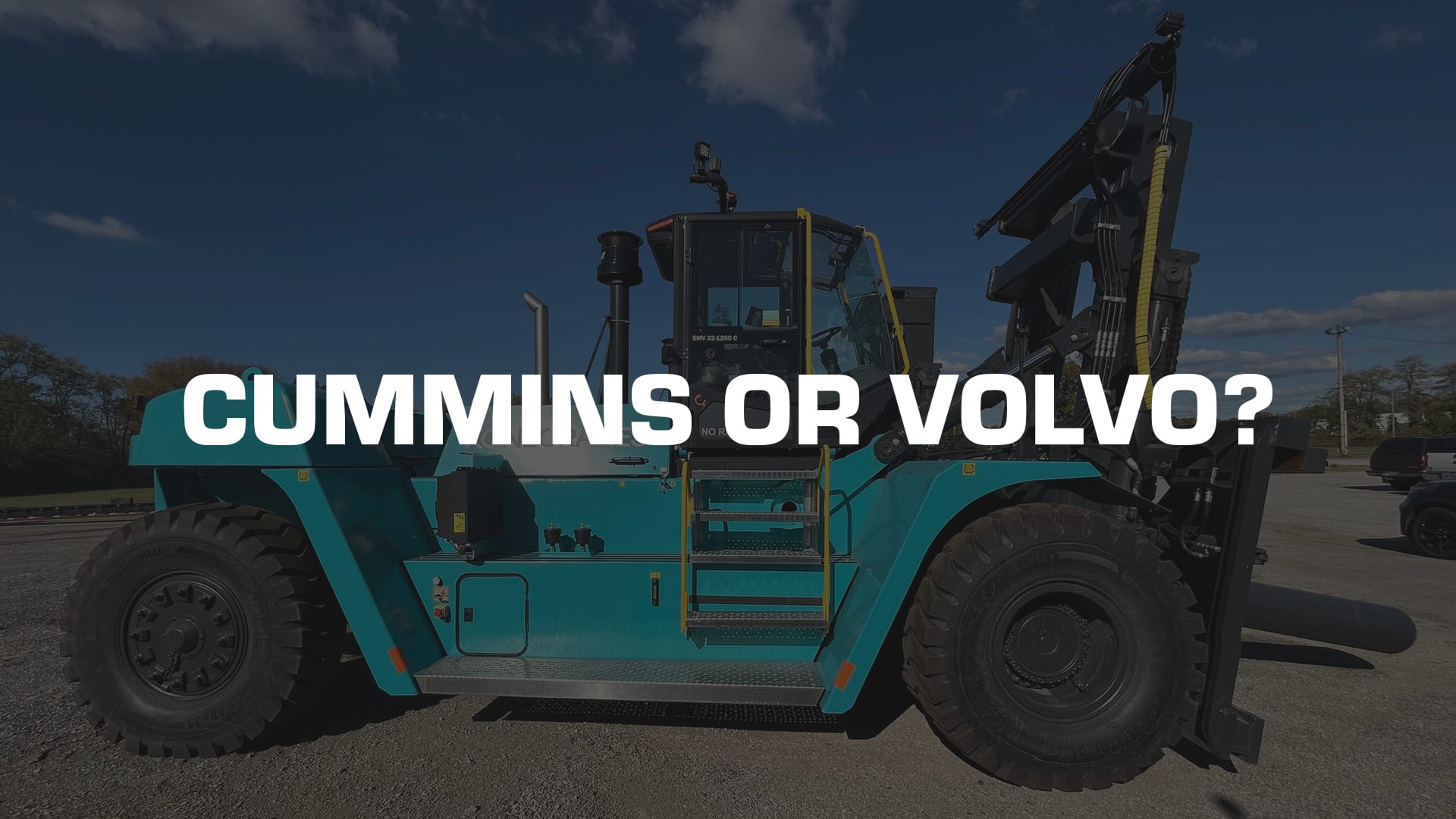
Cummins vs Volvo: Which Engine Option Is Right for Your Konecranes Equipment?

How Do Cold Starts Cause Downtime on Lift Trucks?

How Does Pedestrian Detection on a Lift Truck Prevent a Backover Accident?

What Drags Out Lift Truck Downtime, the Techs or the OEM?

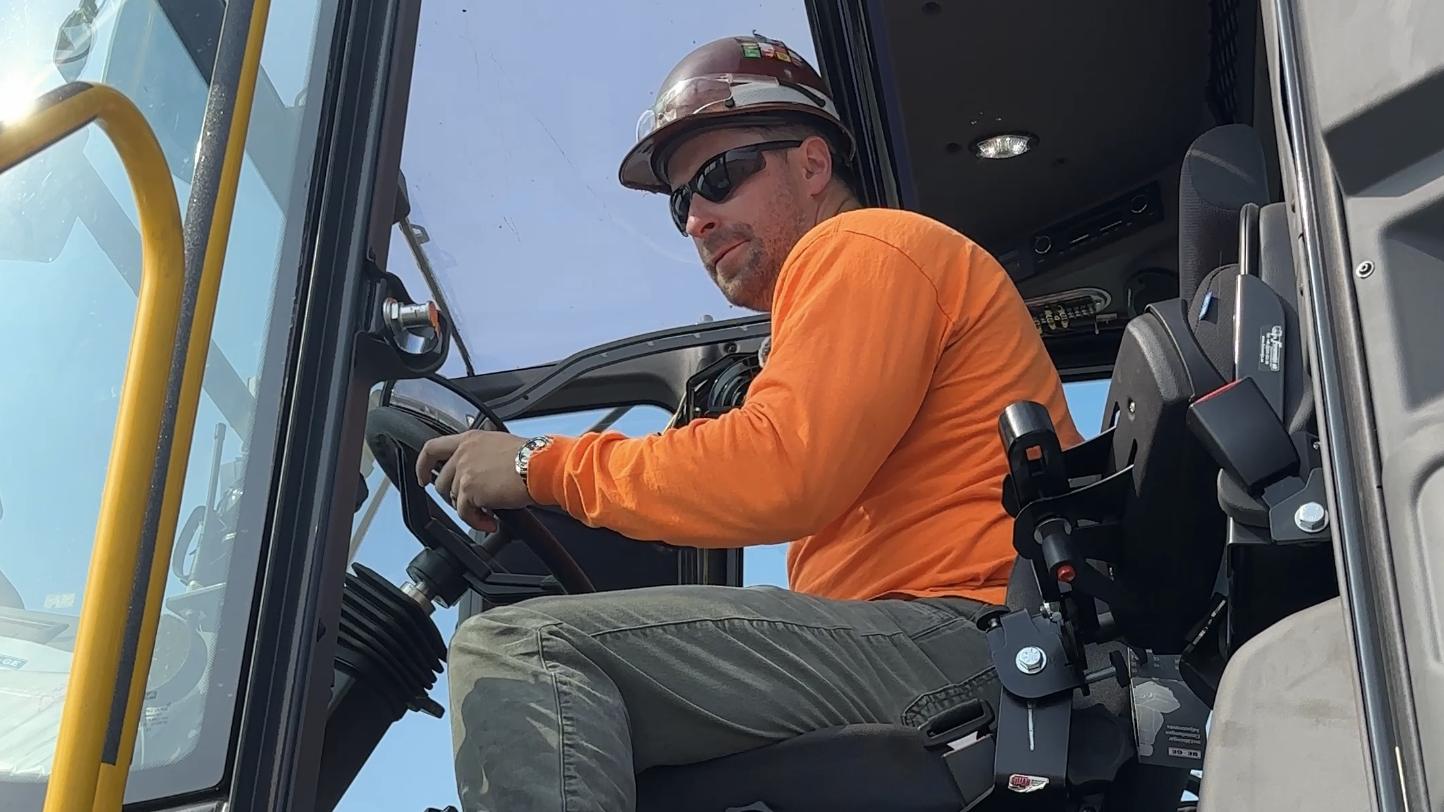
How Much Does Operator Comfort Actually Matter on a Lift Truck?

How Daily Inspections on Konecranes Lift Trucks Increase Uptime

When a Hydraulic Oil Leak Becomes a Fire Hazard: How a Custom Guard Solved the Problem

How to Prevent Lift Truck Overheating That Shuts Down Production – Custom Cooling Package on Konecranes Forklift
What Poor Tire Pressure Management Is Actually Costing Your Lift Truck Fleet
AnswersFrequently Asked Questions
How much does a heavy-capacity forklift cost?
A new heavy-capacity forklift starts at roughly $180,000 in the 10 to 18 ton class, $400,000 in the 18 to 36 ton class, and $750,000 for super-heavy machines. Attachments, application spec, tariffs, and taxes all move the number, so treat any figure as the start of a conversation rather than a quote.
How do Konecranes, Kalmar, Hyster, Sany, and Taylor forklifts compare?
Under the paint they share the same component suppliers: Cummins or Volvo engines, Dana or ZF transmissions, and mostly Kessler drive axles. The real differences are the capacity range, the attachment and electric options, the telematics, and local support. Konecranes runs 10 to 65 tons with the E-VER electric line, Kalmar tops the class at 85 tons, Hyster brings the largest dealer network, Sany competes on price, and Taylor is American-built with the widest US pneumatic-tire lineup.
What is the highest capacity forklift available?
Kalmar’s DCG850 leads the standard class at 85 tonnes. Taylor’s X-1250 reaches 125,000 pounds and Hyster’s H1050XD reaches 105,800 pounds, while Konecranes tops out at 65 tonnes in its standard range. Above that class, purpose-built machines and special orders take over.
What is the difference between a heavy forklift, a reach stacker, and a container handler?
A forklift carries loads on forks in front of the machine. A reach stacker lifts with a telescopic boom and spreader and can work several container rows deep. A container handler grabs boxes with a mast-mounted spreader, working the first row only. If your loads ride on forks, you want a forklift; if they hang from a spreader, you want one of the other two.
Are electric heavy-capacity forklifts worth it?
Increasingly, yes, in the right duty. The Konecranes E-VER runs 10 to 25 tons with the same lifting capacity as its diesel twin, charges in about 50 minutes on lithium-ion, and factory data rates its traction motors and inverters at 20,000 to 30,000 hours, matching or beating the diesel engine they replace. The case depends on your duty cycle, charging windows, and energy costs.
How long does a heavy-capacity forklift last?
Konecranes factory data rates the mast, chassis, and axles at 20,000 to 30,000 hours and the engine at 15,000 to 20,000 hours, with hard conditions cutting every figure sharply. Operating conditions and maintenance discipline, not the badge, are the biggest variables, and a frame-up rebuild on a sound chassis resets the clock for a fraction of replacement cost.
Can one company service all of these brands?
Yes. Brand-independent service providers maintain, repair, and rebuild heavy forklifts of any make, whether or not they sold you the machine. For a mixed fleet, one accountable partner that covers every brand on site is often more valuable than tying yourself to a single OEM dealer.
Should I rent or buy a heavy forklift?
Buy when utilization is high and the horizon is long, because cost per hour drops with ownership over time. Rent for seasonal peaks, projects, or backup coverage. If you want a truck on site with guaranteed uptime and no capital outlay, Equipment as a Service sits between the two: one flat monthly cost, Bulk owns the fleet and carries the maintenance risk.
Talk to UsTell Us Your Application. We Spec the Right Forklift.
We sell, rent, and service heavy forklifts of every major brand, so the truck we recommend is based on your load and duty cycle, not our inventory. Send your application and capacity below and a member of our team follows up with real options to rent, buy, or run it as a monthly uptime package.