
Heavy Equipment Buyer’s Guide
Slag Pot Carriers: How to Compare, Cost, and Choose
The honest guide to the machines that haul molten slag. A straight Kress vs KAMAG vs Kirow comparison, U-frame vs platform explained, real cost context, and what fails in 1,500°C duty.
Up to 250 tons
Pot payloads carriers handle today
1,500°C cargo
Molten slag, about 2,700°F
Brand-independent
Honest comparison, no OEM bias
Updated July 2026
A slag pot carrier hauls the hottest cargo in heavy industry: pots of molten slag at roughly 1,500°C, around the clock, between the furnace and the slag yard. When one parks, the furnace schedule is next. This guide gives you the straight answers before you commit: how Kress, KAMAG, and Kirow compare, what U-frame versus platform really changes, what these machines cost, and what fails first in slag duty. We service and rebuild this class of machine regardless of brand, so we have no reason to tell you anything but the truth about all of them.
Bulk Equipment Corp is a brand-independent heavy-equipment uptime partner in Michigan City, Indiana, serving steel mills, foundries, and slag-processing operations across the Midwest and Southeast. We sell, service, and rebuild slag pot carriers and the rest of the mill mobile fleet.
The CategoryWhat Is a Slag Pot Carrier?
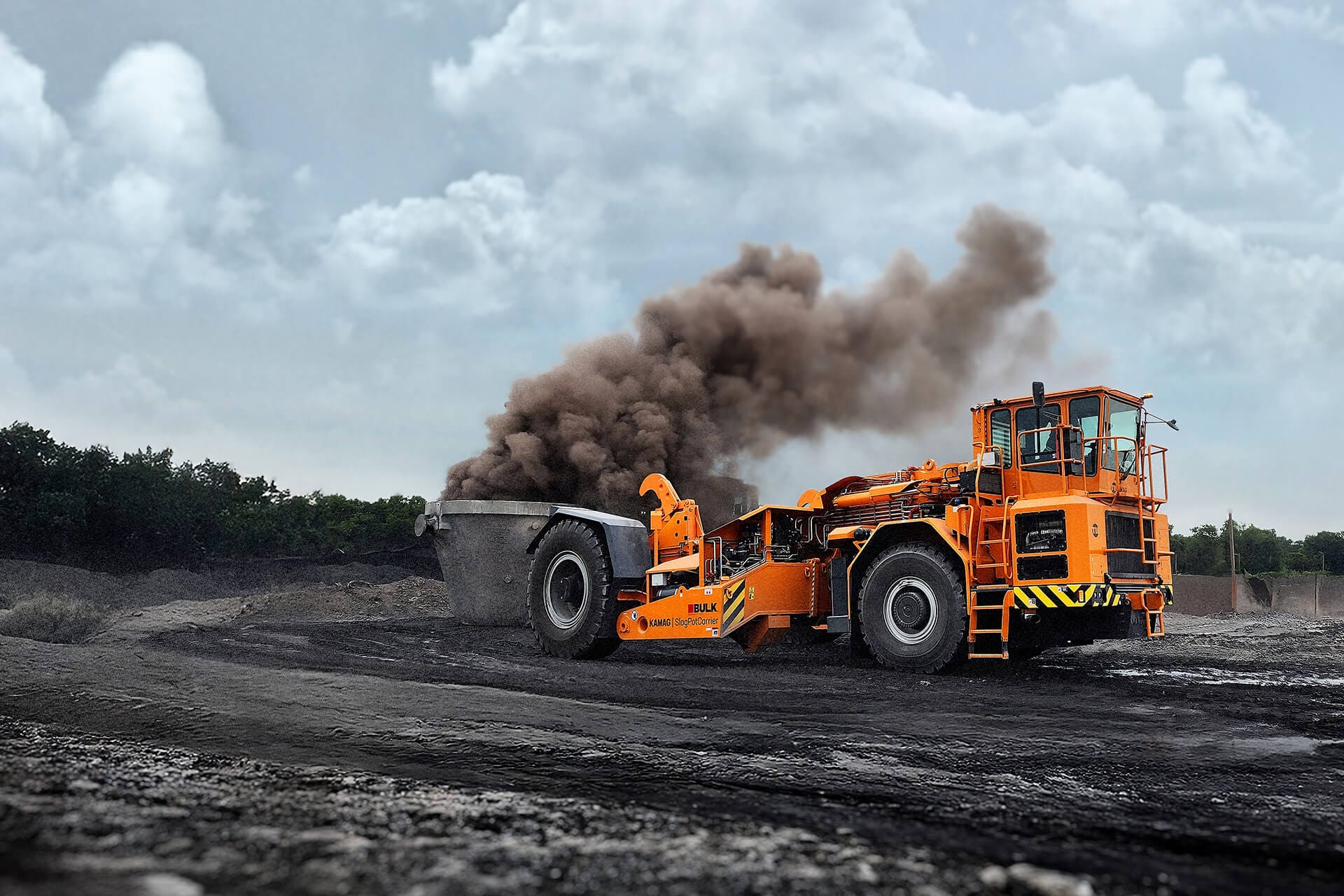
A slag pot carrier is a purpose-built mobile machine that picks up, transports, and dumps slag pots, the massive cast vessels that catch molten slag from a blast furnace, BOF, or electric arc furnace. Operators on the floor just call them pot carriers. Current machines carry pots of roughly 600 to 1,950 cubic feet (about 17 to 55 cubic meters) and payloads from 60 to 250 tons (about 130,000 to 550,000 pounds), pick the pot up without a crane, and tip it at the slag yard, with the operator protected the entire cycle. Pot geometry varies widely from site to site, and no two pots weigh exactly the same once skull and slag build up, so a carrier is matched to the specific pots it will handle.
| Class | Typical pot payload | Typical work |
|---|---|---|
| Foundry and non-ferrous | Up to 60 tons | Foundry slag, dross, and smelter by-products on shorter routes |
| Steel mill | 60 to 250 tons | EAF and BOF slag haulage, from standard melt shops up to the largest integrated mills |
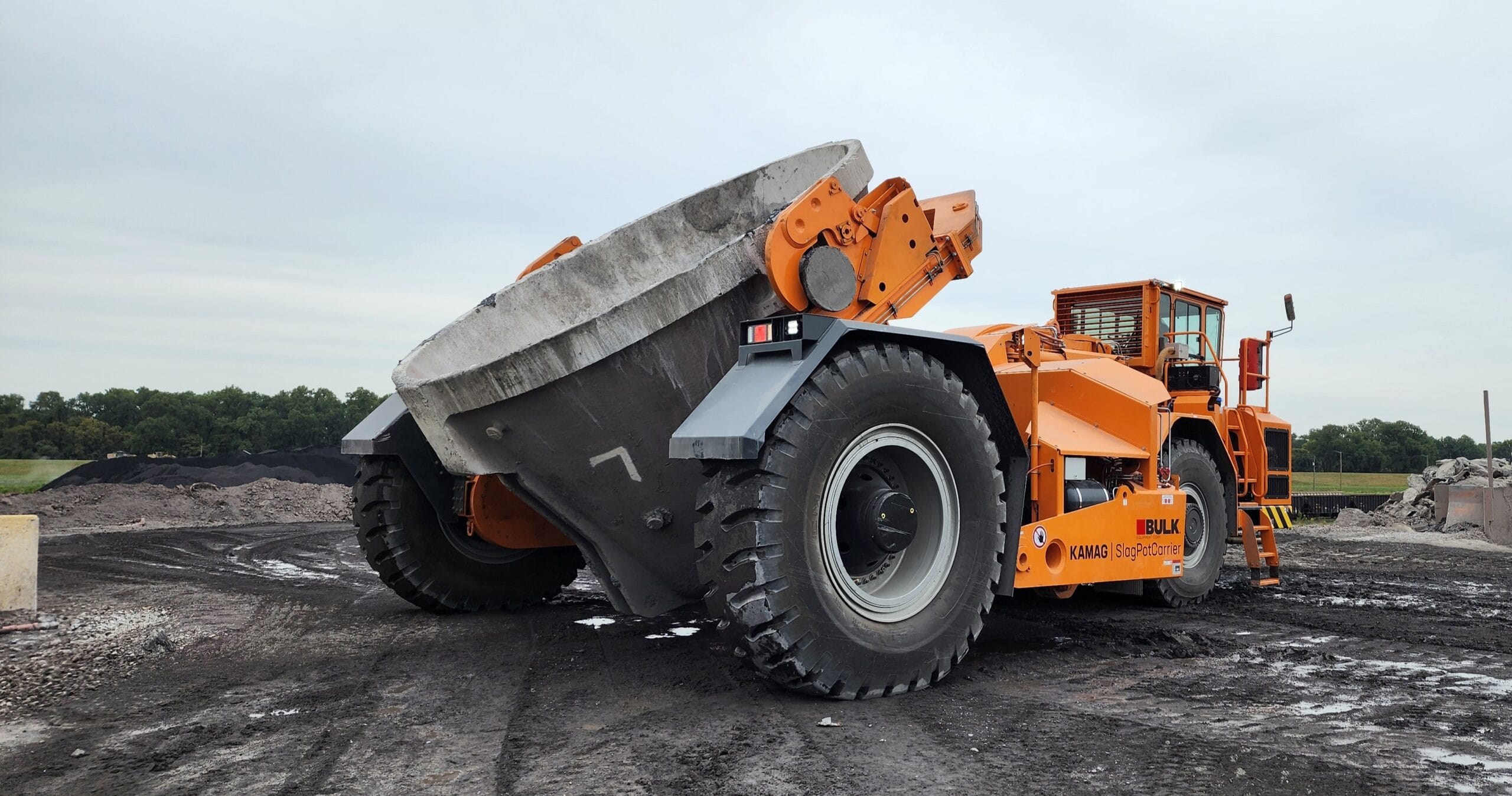
The category began in 1965 on converted scraper tractors. That architecture is still in service today, alongside purpose-built chassis.
One distinction worth drawing: a slag pot carrier hauls the pot with molten slag in it. Trucks that haul cooled, processed slag out of the yard are a different job and a different machine. And if your heavy haulage is coils, slabs, or scrap pallets rather than pots, that is the industrial transporter class. For the rest of the mill mobile fleet, see our guides to heavy-capacity forklifts, reach stackers, loaded container handlers, and empty container handlers.
CostHow Much Does a Slag Pot Carrier Cost?
No Western manufacturer publishes slag pot carrier pricing, and any market report quoting $100,000 to $500,000 is describing lighter imported units, not the purpose-built machines running North American mills. A new Kress or KAMAG class carrier realistically runs about $1.5 million to $4 million across the full 60 to 250 ton range, and the final number moves with pot size, frame configuration, and how much heat protection the application demands.
| Way to get one | Typical range (approx.) |
|---|---|
| New purpose-built carrier (60 to 250 t) | $1,500,000 to $4,000,000 |
| Used or older scraper-based unit | Rarely available. Units are held for decades, and because each is purpose-built to a site, moving one elsewhere usually needs heavy modification. |
| Frame-up rebuild of a sound carrier | Commonly $1,000,000 or more. Near that figure, a new machine (often only about $500,000 more) is worth weighing. |
- Pot size and payload. The single biggest price driver. In North America pots are sized in cubic feet: common sizes run from about 600 cubic feet (17 cubic meters) up to roughly 1,050 cubic feet (30 cubic meters) and beyond. A big pot needs a very different machine than a small foundry pot.
- U-frame versus platform. The frame architecture changes the structure, the lift system, and the price. More on that below.
- Heat package. Heat shielding, a sealed and protected cab, and protected hydraulics and wiring all cost real money against radiant heat and slag splash, and all earn it back.
- Tires. Large earth-moving tires are a major recurring cost, carried over the life of the machine rather than paid once at purchase.
- Duty cycle. A carrier on a 24-hour furnace operation gets spec’d, cooled, and supported differently than one running a single shift.
The sticker is not the number that hurts. A parked pot carrier backs slag up toward the furnace, and that makes cost per cycle and time to repair the figures that matter over the machine’s life. Spec the support before you spec the paint color.
What will a pot carrier actually cost you?
Send us your pot size, route, and cycle count. We come back with real numbers for new, used, rebuilt, or an all-in monthly package. No runaround on price.
The ComparisonKress vs. KAMAG vs. Kirow
The slag pot carrier itself is built by just three manufacturers: Kress, KAMAG, and Kirow. Kress builds on modified Caterpillar scraper prime movers in Illinois; KAMAG builds a standardized U-frame and platform series in Germany with Cat power and Allison automatics; Kirow builds a respected European line that is not available in the North American market. In North America the realistic head-to-head is Kress versus KAMAG. Newer dump-box alternatives from TML and Paling, which move molten slag without a pot, are covered just below.
| Spec | Kress | TII KAMAG | TECHNE Kirow |
|---|---|---|---|
| Payload range | 35 to 250 tons across P, PRL, and PELS lines | 60 to 170 tons, about 187 US tons (SPC series) | 40 to 150 tons (Slag Taurus P and U) |
| Pot sizes | Up to ~1,600 cu ft (45 m³) | ~600 to 1,950 cu ft (17 to 55 m³) | Per model |
| Architecture | Built on a modified Caterpillar 621/631 scraper prime mover, articulated steering, built per pot | Purpose-built chassis, U-frame and platform versions, 130° tip angle | Purpose-built chassis, platform (P) and U-frame (U) lines |
| Power and drive | Caterpillar scraper prime mover | Cat C15 with Allison full automatic | Diesel, model-specific |
| Controls and safety | Proprietary deskulling system, shielded wheels | Siemens control with remote diagnostics, heat protection package | KISS PLC safety and monitoring system |
| Built in | Brimfield, Illinois, USA | Ulm, Germany (US production partnership in Florida) | Leipzig, Germany |
| Standout | Invented the category in 1965; custom-engineered to your exact pot and site | Standardized series with automatic transmission and remote diagnostics | Units delivered outside North America; not available in the NA market |
Kress
Kress Corporation built the first slag pot carrier in 1965 for a slag contractor at Great Lakes Steel, and has built them in Brimfield, Illinois ever since. Kress still builds on modified Caterpillar 621 and 631 scraper prime movers to this day, with the trailer engineered around the Cat prime mover and the whole machine shaped to the customer’s exact pot, route, and clearances, payloads to 250 tons, and a proprietary deskulling system. The argument for Kress is a machine matched precisely to your site, built and supported domestically.
TII KAMAG
KAMAG (TII Group, Ulm, Germany) builds the SPC series from 60 to 170 tons, about 187 US tons, in both U-frame and platform versions on a purpose-built chassis, running a Cat C15 with an Allison full automatic transmission, Siemens controls with remote diagnostics, and a standard 130 degree tipping angle. Reaching the top of that payload range uses steerable rear axles, a recent advancement rather than a common feature. Standardized payload steps mean proven engineering and predictable parts, backed by an established North American sales and service channel.
TECHNE Kirow
Kirow (Leipzig, Germany) builds the Slag Taurus in platform and U-frame lines from 40 to 150 tons, with its KISS PLC safety system, and has delivered over 300 units in 25 years. The catch for a US buyer: it is active in Europe but not available in the North American market, with no established Kirow carrier dealer or service network here. A machine this critical needs parts and techs closer than an ocean away, so for most NA buyers it is a reference point rather than a real option.
The right machine comes down to your pot, your route, your melt schedule, and who can keep it running near you. A carrier nobody within 500 miles can service is a liability, no matter whose name is on it.
Slag pot carrier alternatives: TML and Paling
Two newer machines move molten slag without a pot at all. They are not pot carriers, but they solve the same problem, so they belong in the comparison. Paling fits a transporter, essentially a KAMAG-style IHT, with a specialized dump box that receives molten slag and dumps it, more like a heat-protected dump truck than a pot carrier. TML builds the hot box mover, a refractory-lined dump box that resembles an on-highway dump truck and is shuttled by a remote-controlled, semi-autonomous unit. Both still move molten slag; they just replace the pot with a box. The technology is still in its infancy in North America, but uptake is growing, and for an EAF shop open to rethinking how slag leaves the furnace, it is worth a look.
Ready to spec a KAMAG pot carrier?
Dig into the SPC series, configurations, and options on the Bulk Lift Products equipment site.
ConfigurationsU-Frame vs. Platform: Which Pot Carrier Design Fits Your Mill?
A U-frame carrier straddles the pot: the open U of the frame backs over a pot sitting at ground level, grabs it by the trunnions, and lifts it a short distance. No crane, no transfer stand, a short pickup cycle, a low center of gravity, and a low overall height that clears doorways and pipe bridges. A platform carrier instead lifts the pot onto a deck, which makes the machine narrower and lets it take pots at height off transfer cars and stands, but its pickup and retrieval take longer. That faster cycle time is the main reason U-frame carriers dominate in North America. Most mills running ground-level pots end up in a U-frame; platform machines earn their place where the pot handoff happens above grade or the roads are tight.
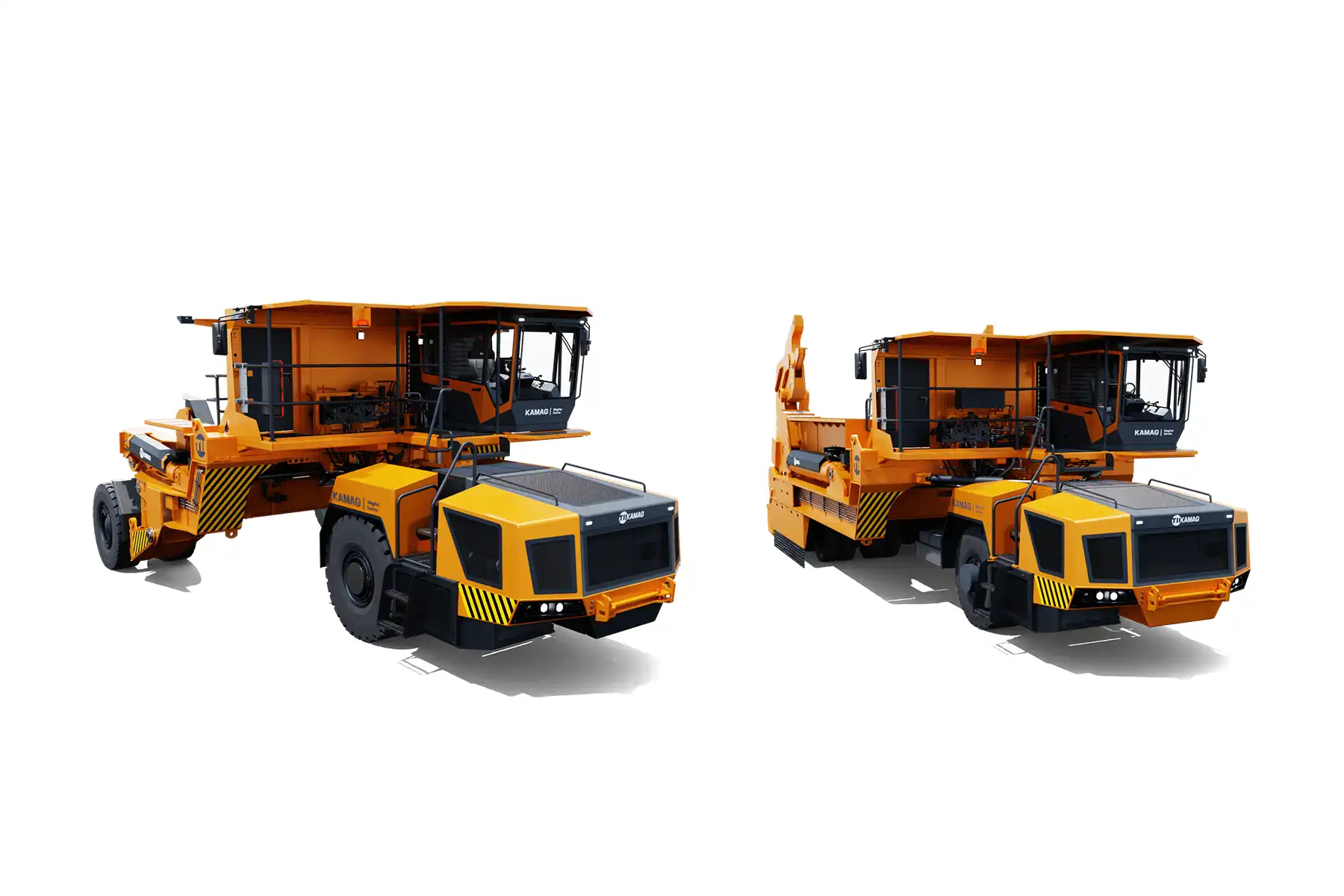
The same carrier platform in U-frame and platform configurations. The frame decides how the pot gets picked up.
| U-frame | Platform | |
|---|---|---|
| Pot pickup | Backs over the pot at ground level, grabs the trunnions | Lifts the pot onto a deck, can take pots at height off transfer cars |
| Pickup cycle time | Short; faster grab and retrieve | Longer; slower grab and retrieve |
| Center of gravity | Low; pot hangs between the rear axles | Higher; pot rides on the deck |
| Machine profile | Low height, wide rear track | Taller, but no wider than the pot |
| Best fit | Ground-level pots, height-restricted routes, fast furnace cycles | Transfer-car handoffs, narrow mill roads, varied pickup points |
Scraper-prime-mover vs. purpose-built carriers
The category started in 1965 on converted scraper tractors, and that architecture is not just history. Kress still builds current carriers on modified Caterpillar 621 and 631 scraper prime movers, and has built a 651, with the trailer engineered around the Cat prime mover. KAMAG and Kirow instead use purpose-built chassis with multi-axle electronic steering, automatic transmissions, PLC safety systems, and remote diagnostics. Both approaches are in production today; the right one depends on the pot, the route, and the support behind the machine. If you are running an older unit, the practical question is usually rebuild versus replace, and that depends on the frame, not the hour meter.
Want to see how the options stack into a real spec? Our slag pot carrier configurator walks through pot size, frame style, and options step by step.
ProblemsWhat Fails on a Slag Pot Carrier (and What It Costs You)
Slag duty is the hardest environment a mobile machine can live in: roughly 1,500°C cargo, radiant heat, sparks, and a cycle that never stops. The failures are predictable, which means they are preventable.
- Heat and slag-splash damage. Radiant heat is only part of it. Molten slag splash during transport and dumping is a primary source of damage, fouling and burning through hoses, wiring, and seals. Heat shielding is a wear item; inspect it like one.
- Tires. The industry switched to large earth-moving tires roughly 20 to 30 years ago; the old practice used surplus aircraft tires, which were never rated for this kind of rough off-road duty. Kress still offers aircraft-type tires on its smaller machines where space demands them, but earth-moving tires are now the standard. Either way, tires are a continuous operating cost, not a one-time buy.
- Hydraulic cylinders. The lift and tip cylinders work under heat and full load every cycle, and cylinder rebuilds are a fact of life on high-hour machines.
- Hitch, bearings, and welds. The connection between prime mover and trailing unit takes shock loads all day. We wrote up how KAMAG protects the hitch from bearing and weld repairs from our own service work.
- Electrical faults. Troubleshooting time is downtime. Panel layout matters more than buyers think; here is what we see on KAMAG electrical panels during service calls.
One thing that looks like a problem but is not: skull buildup. A layer of cold-slag cushion is deliberately left in the bottom of the pot, sometimes called shelling, to protect the pot from the molten slag and steel. It is a normal, intentional part of the process rather than a failure, though it does add deadweight that good operating practice manages.
None of this rules out a brand; it is the duty. What it argues for is disciplined PM, heat-shield inspection, and a service partner who has actually worked on these machines. A frame-up rebuild on a structurally sound carrier resets the cost curve for far less than a new machine.
Already running pot carriers? Keep them running.
Brand-independent field service, certified welding and line boring, and frame-up rebuilds on any make. Tell us what is down.
OwnershipBuy New, Buy Used, Rebuild, or an All-In Monthly Package?
There are four realistic ways to keep a pot carrier moving slag at your mill: buy new, buy used, rebuild what you have, or take an all-in monthly package. The right one depends on your furnace schedule, your capital plan, and how much downtime risk you want to own.
| Way to get one | Best when | Trade-off |
|---|---|---|
| Buy new | A melt shop that wants current safety systems, diagnostics, and a fresh cost curve instead of older dig-and-haul methods | Seven-figure capital outlay and OEM lead times |
| Buy used | A budget bridge or a backup unit to protect uptime | Heat history is hard to see from the outside; inspect the frame, not the paint |
| Frame-up rebuild | Your carrier’s frame is sound but everything on it is tired | The machine is out of service during the rebuild; plan coverage |
| All-in monthly package (Equipment-as-a-Service) | You want guaranteed carrier availability at one predictable flat monthly cost, zero capital outlay | Longer-term, site-specific commitment |
The all-in monthly package, sometimes called Equipment-as-a-Service, is the one most melt shops do not know exists. The equipment and the service are bundled into one flat monthly rate: Bulk owns the machine, runs proactive PM, keeps the heat package inspected, and guarantees availability, with zero capital outlay. When a parked carrier backs slag up toward the furnace, moving that risk off your books can beat the sticker price math of owning.
Not sure which way to go? Talk it through.
Tell us your melt schedule and what you are running today, and we will lay out whether new, used, a rebuild, or the all-in monthly package fits your operation.
The DecisionWhat Makes a Pot Carrier “Best” for Your Mill
There is no single best slag pot carrier, only the best match for your pot, your route, and the partner behind the machine. Run any option through four filters.
- Match the pot. Pot volume, trunnion design, and payload headroom decide the machine class. Undersizing destroys the carrier; oversizing wastes capital.
- Match the route. Pickup height, doorway and pipe-bridge clearances, road width, and reversing distance decide U-frame versus platform.
- Match the duty cycle. A 24-hour EAF operation demands a different heat package, PM program, and backup plan than a single-shift foundry.
- Weigh the support. Parts lead time and time to a qualified tech decide your real cost per cycle. This machine cannot wait on an overseas parts crate.
Ask the people who run these machines and the answer is consistent: the badge matters less than availability. The best pot carrier is the one that makes every cycle, backed by people who answer the phone when it does not.
By IndustryWhere Slag Pot Carriers Earn Their Keep
Pot carriers serve a narrower world than forklifts, but inside it they are mission-critical. Here is how the work differs across the operations that run them.
Integrated Steel Mills
- Blast furnace and BOF slag haulage on the largest pots in the industry
- 120 to 250 ton payloads
- Routes shared with hot metal traffic, where clearances and visibility are spec drivers
- Continuous cycles where carrier availability protects the furnace schedule
EAF Melt Shops
- Electric arc furnace slag on fast, repeating melt cycles
- 60 to 120 ton payloads
- U-frame pickup that keeps pace with tap-to-tap times
Mill & Slag Services
- Slag-processing contractors running pot carriers on customer sites under uptime contracts
- Operators hired specifically as pot carrier drivers
- Mixed fleets where one service partner across brands simplifies the operation
- Used, rebuilt, and rental units to flex with contract terms
Foundries & Non-Ferrous
- Foundry slag, aluminum dross, and smelter by-products
- Compact carriers under 60 tons for smaller pots and tighter plants
- Shorter routes where pickup height and door clearances drive the spec
- Heat packages sized to the actual cargo, not overbuilt
ProofFrom Our Own Service Work
What we see with the panels open
We work on pot carriers with the covers off, so our take on these machines comes from service calls, not brochures. Two examples from the field: how the hitch design on KAMAG carriers protects the bearings and welds that fail expensively on other designs, and how an electrical panel laid out for troubleshooting cuts diagnostic time and parts-ordering errors when a carrier is down and the slag is waiting.
Read the write-ups: the hitch and its bearings and why KAMAG carriers are bolted, not welded.
AnswersFrequently Asked Questions
How much does a slag pot carrier cost?
No Western manufacturer publishes pricing, but a new purpose-built carrier in the 60 to 250 ton class realistically runs about $1.5 million to $4 million depending on payload, frame configuration, and heat package. The used market is nearly non-existent because owners hold these machines for decades, and a frame-up rebuild commonly runs $1 million or more, close enough to new that buyers often weigh replacement.
What is the difference between a U-frame and a platform slag pot carrier?
A U-frame carrier backs over a pot at ground level and grabs it by the trunnions, giving a much shorter pickup cycle time, a low center of gravity, and a low machine height. A platform carrier lifts the pot onto a deck, which makes the machine narrower and lets it take pots at height from transfer cars and stands. Ground-level pots and fast cycles favor the U-frame; transfer-car handoffs and narrow roads favor the platform.
Who makes slag pot carriers?
The slag pot carrier itself is built by three manufacturers: Kress (Brimfield, Illinois), TII KAMAG (Ulm, Germany), and TECHNE Kirow (Leipzig, Germany). In North America the realistic comparison is Kress versus KAMAG, because Kirow is not available in the NA market. TML and Paling build newer dump-box alternatives that move molten slag without a pot, but those are not pot carriers.
What is the difference between a slag pot carrier and a slag hauler?
A slag pot carrier is a specialized, heat-protected machine that moves molten slag in a pot. A slag hauler generally means a conventional off-road or articulated dump truck, sometimes with a special liner, moving cooled or semi-solidified slag aggregate. In between sit newer dump-box machines from TML and Paling that move molten slag without a pot. The dividing line is molten versus cooled, and pot versus box.
How big are the slag pots these machines carry?
Current carriers handle pots of roughly 600 to 1,950 cubic feet (about 17 to 55 cubic meters), with payloads from 60 to 250 tons including the pot. Common pot sizes run around 600 cubic feet (17 cubic meters) and 1,050 cubic feet (30 cubic meters). The slag leaves the furnace near 2,700 degrees Fahrenheit, which is why the machines carry heat shielding and sealed cabs.
Should I rebuild my pot carrier or replace it?
It depends on the frame, not the hour meter. A purpose-built carrier has roughly a 40,000-hour rebuild life as a rule of thumb, but with a disciplined maintenance program machines have run far beyond that. A frame-up rebuild commonly runs $1 million or more, so if the frame has heat damage or cracking a new machine often wins; if the frame is sound, a rebuild resets the powertrain, hydraulics, wiring, and heat protection. An inspection settles it.
Can one company service every brand of pot carrier?
Yes. Brand-independent service providers maintain, repair, and rebuild pot carriers of any make, whether or not they sold the machine. For a mill, a partner who covers the carrier, the loaders, and the rest of the mill mobile fleet under one relationship is often more valuable than a single OEM tie.
Are slag pot carriers automatic or manual?
Essentially all of them, and have been for the last 35 to 40 years. KAMAG, for example, pairs a Cat C15 with an Allison full automatic. A few legacy manual carriers may still be out there, but automatic is the norm. Automatics reduce driveline shock loads and simplify operator training on a machine that reverses loaded many times a shift.
Talk to UsTell Us Your Slag Handling Setup. We Spec the Right Carrier.
We sell, service, and rebuild slag pot carriers and the rest of the mill mobile fleet, so the machine we recommend is based on your pot, route, and melt schedule, not our inventory. Send your application below and a member of our team follows up with real options for new, used, rebuilt, or an all-in monthly package.