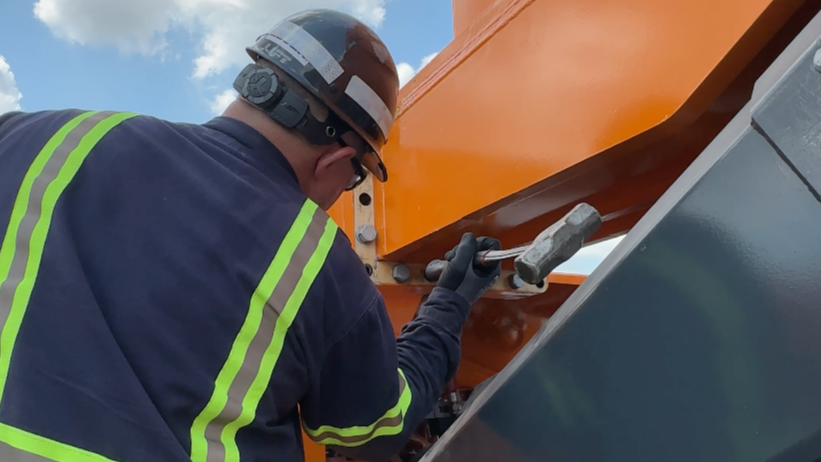
Most slag pot carriers in North America are welded together, and that old school design costs you every time the machine needs work. The KAMAG slag pot carrier is built differently: everything is bolted and pinned together instead of welded into place. That one design choice allows assembly in about one week instead of weeks of extra waiting, which means less downtime and less money bleeding out while the machine sits.
Why Does Welding Slow Down Slag Pot Carrier Repairs?
On most pot carriers, everything is welded into place, including the tubes that run along the backside of the machine. Welding has been the norm on these carriers for a long time, and it is inefficient. A welded design can add 2 to 3 weeks of extra waiting, and the whole time the carrier sits, you are bleeding time and money.
How Is a KAMAG Slag Pot Carrier Built Differently?
KAMAG takes the opposite approach: everything on the slag pot carrier is bolted and pinned together rather than welded. Because the connections are mechanical instead of welded, the machine can be assembled in about one week. For a Maintenance Manager weighing carriers, that difference shows up directly in how long the machine is out of service.
Do Bolted Connections on a Slag Pot Carrier Come Loose?
The bolts follow a set torque procedure: they are torqued, the machine is run, and then they are re-torqued a final time. Once that final re-torque is complete, the connections should never come loose. The service technicians at Bulk Equipment Corp., who maintain and repair heavy mobile equipment like slag pot carriers at steel mills and slag handling operations, point to that bolted and pinned design as the most impressive feature of the machine.