Executive Summary
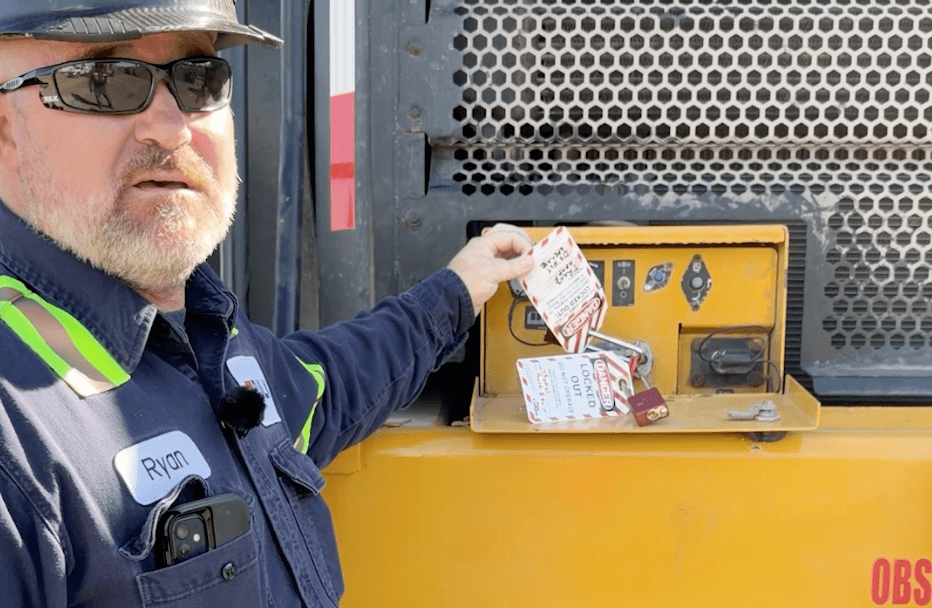
Lockout tagout is the safety process that makes a down machine safe to work on. Every mechanic on the job puts his own safety lock and tag on the machine, with his name and the date on the tag. Energy on the machine is isolated so nobody can start it, chock blocks on the wheels keep it from rolling, and because the bed is raised for a transmission repair, pins on both sides lock the bed to the rear so it cannot come down. The result is a safe work area where the machine cannot start, move, or drop on the people working inside it.
Why Does Each Mechanic Put His Own Safety Lock on the Machine?
When two mechanics are working on the same down machine, both of them are locked out on it at the same time, each with his own safety lock and a lockout tagout tag carrying his name and the date. With the machine tagged out and its energy isolated, nobody can start it while either mechanic is on the job, so each man’s safety is protected by his own lock rather than someone else’s.
How Do You Keep a Raised Bed From Coming Down During a Transmission Repair?
On this machine the bed is up in the air, and pins on the end of the bed pin it to the rear on both sides so it cannot come down. That matters for safety because the mechanics are working on the transmission, which sits directly in the center of the machine, so the bed has to stay put the entire time they are under it.
What Keeps a Locked-Out Machine From Moving?
Chock blocks on the wheels keep the machine from rolling away, so even with the energy isolated, nobody can push it. Safety locks and tags stop the machine from starting, chocks stop it from moving, and the bed pins stop the bed from coming down, which together make a safe work area.