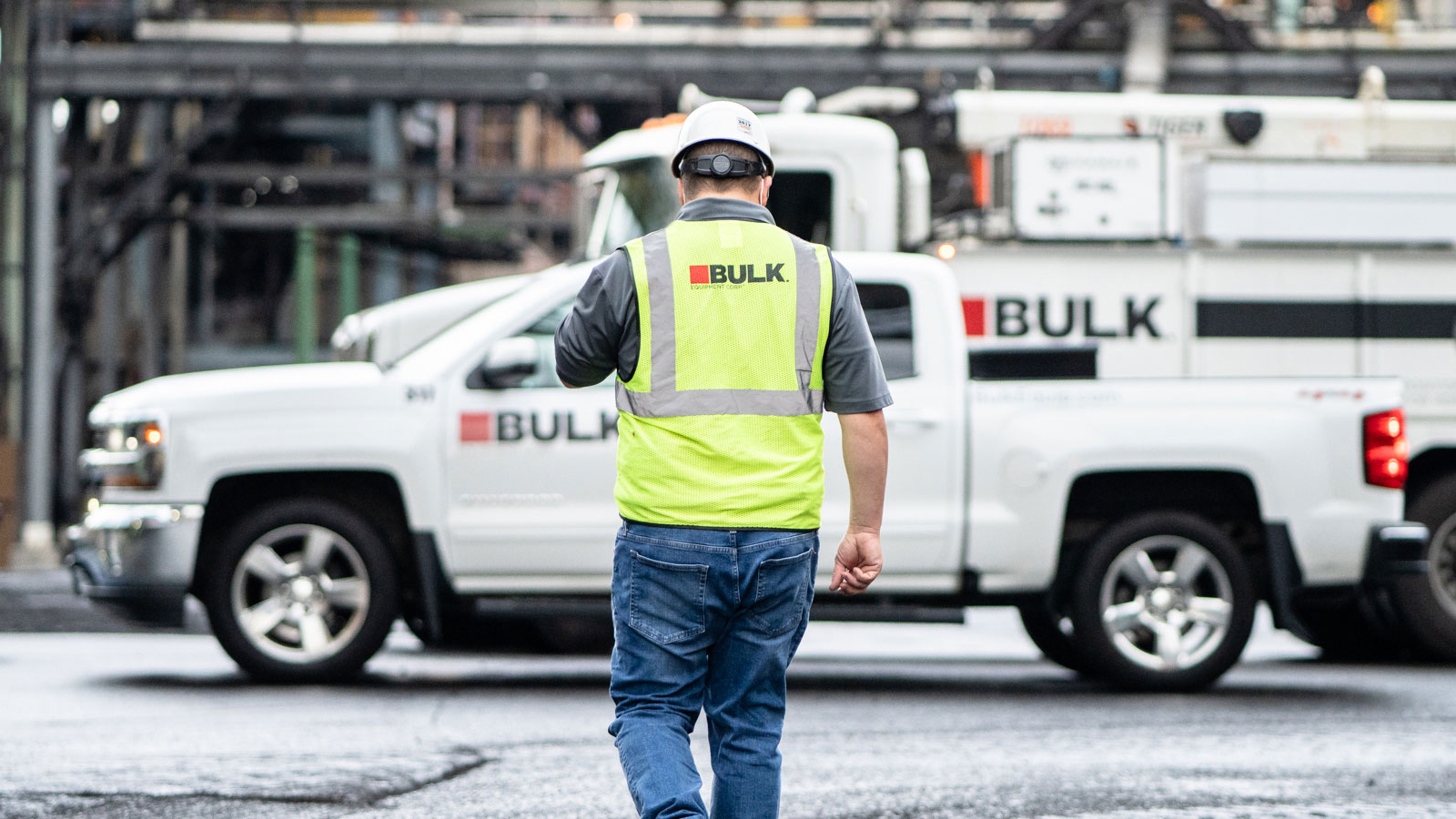
How Do You Safely Drive Equipment Into an Enclosed Work Area?

SafetyToolbox Talks

Indoor bays are useful for working on equipment, but driving vehicles and equipment in and out of enclosed areas adds hazards. Limited visibility in confining spaces and sharp light changes between bright outdoors and a dark bay can lead to property damage or injuries.

What Should You Do When Driving Into or Out of an Enclosed Area?

Inspect, clear your path, and use a spotter when visibility is limited.

  • Always perform a visual inspection of the area first, making sure it is free of hazards, other vehicles or equipment, and personnel
  • Confirm you have proper horizontal and vertical clearance before pulling in
  • Perform a 360-degree walk-around of your vehicle or equipment to catch hazards you cannot see from the driver’s seat and to ensure no one is working on it
  • Sound your horn before moving and again before entering or exiting the enclosed area
  • Use a spotter if your vision is obstructed, and if the driver and spotter cannot keep visual contact, use radio contact on a secure channel
Get The Uptime Report

Practical insights on heavy equipment decisions, service, and downtime risks so you can keep your operation moving.

Related articles

Fleet Management

What Happens to a Heavy Equipment Fleet Without Preventive Maintenance?

Without preventive maintenance, heavy equipment breaks down early: machines get parked within less than 1,000 hours, a skipped oil and
Equipment Guide

Should You Rebuild Heavy Equipment or Buy New?

Rebuild heavy equipment or buy new? A new Caterpillar loader runs about $1.3 million. A certified rebuild costs a fraction
Equipment Guide

What Is a Hot Pit Loader?

What is a hot pit loader? A Cat 988K built for slag pits, with fire wrap, tire chains, blast glass,
Fleet Management

What Is Equipment as a Service (EaaS) for Heavy Equipment?

EaaS for heavy equipment explained: you buy hours, not a serial number, with daily maintenance, a backup machine if needed,
Fleet Management

How Much Can Skipping Preventive Maintenance Cost on Heavy Equipment?

Skipping preventive maintenance on heavy equipment can cost $75,000 to $100,000 in a premature engine failure. On-time oil and filter
Fleet Management

Why Are Maintenance Managers Nervous About Calling a New Service Company?

Why maintenance managers are nervous about calling a new service company: expensive assets, 24/7 uptime, and what eases the concern

Comments

Fill out the information below to leave a comment.